


The 2026 Midterm Elections: What Every Pittsburgh Voter Needs to Know
Why this election matters — and how your vote could shape the future of Pennsylvania and the nation.
By Pittsburgh Urban Media Staff · July 2026
If you’ve been watching the news, you’ve probably heard one phrase repeated over and over: “The midterm elections.” But what exactly are they? Why do political experts call them one of the most important elections in America? And why should Pittsburghers care?
The answers are simpler than you might think.
What Are the Midterm Elections?
Midterm elections take place halfway through a president’s four-year term. Unlike a presidential election, voters are not choosing a president. Instead, they elect members of Congress, governors in many states, state legislators, judges, and local officials.
Think of the midterms as America’s “report card” on the current administration. Voters decide whether to strengthen the president’s party or give more power to the opposition. The results often reshape the political landscape for the final two years of a president’s term.
What’s on the Ballot in Pennsylvania?
Pennsylvania is once again expected to be one of the nation’s most closely watched battleground states. In 2026, Pennsylvanians will vote for:
For voters in the Pittsburgh region, congressional races and legislative contests could determine which party controls key decision-making in Harrisburg and Washington.
Why Does This Matter to the President?
Even though the president isn’t on the ballot, the outcome can dramatically affect the White House. If the president’s party loses control of the U.S. House or Senate, it becomes much harder to pass legislation, approve budgets, or advance major policy initiatives. Committee leadership changes, oversight investigations may increase, and bipartisan negotiations become more important.
Historically, the party that controls the White House often loses congressional seats during midterm elections, making these races especially significant.
Why Pennsylvania Is So Important
Pennsylvania is considered one of America’s premier swing states. Elections here often help determine which party controls Congress and can influence the national political conversation. The battle for control of the Pennsylvania House and Senate will also affect decisions on:
With control of the Pennsylvania Legislature closely divided, even a handful of races could shift the balance of power.
Does My Vote Really Matter?
Yes.
Many elections in Pennsylvania have been decided by only a few hundred — or a few thousand — votes. Your vote helps determine who represents your neighborhood, writes state laws, approves school funding, invests in roads and bridges, and decides policies affecting healthcare, housing, and economic opportunity.
Local elections often have a more immediate impact on daily life than presidential elections.
Why This Election Matters to Black Communities
For African Americans, the stakes extend beyond politics — they touch everyday life. Issues likely to shape this election include:
The officials elected this year will influence decisions that affect families, entrepreneurs, students, seniors, and communities across Pennsylvania for years to come.
How to Prepare
Being an informed voter starts long before Election Day. Here are four simple steps:
The midterm elections may not receive the same attention as a presidential race, but their impact can be just as significant. They determine who writes the laws, approves budgets, oversees government agencies, and represents communities in Harrisburg and Washington.
For Pittsburgh and Pennsylvania, the 2026 midterms will help shape the future of education, economic development, healthcare, housing, public safety, and civil rights.
One vote may seem small. But when millions of individual voices come together, they determine the direction of a city, a state, and a nation.
Pennsylvania is one of America’s premier swing states. Elections here often help determine which party controls Congress — and can influence the national political conversation for years.
Pittsburgh Urban Media is committed to keeping Black voters informed, engaged, and empowered throughout the 2026 election cycle. Check back for candidate profiles, issue breakdowns, and community voter guides.
Why Your Vote Matters
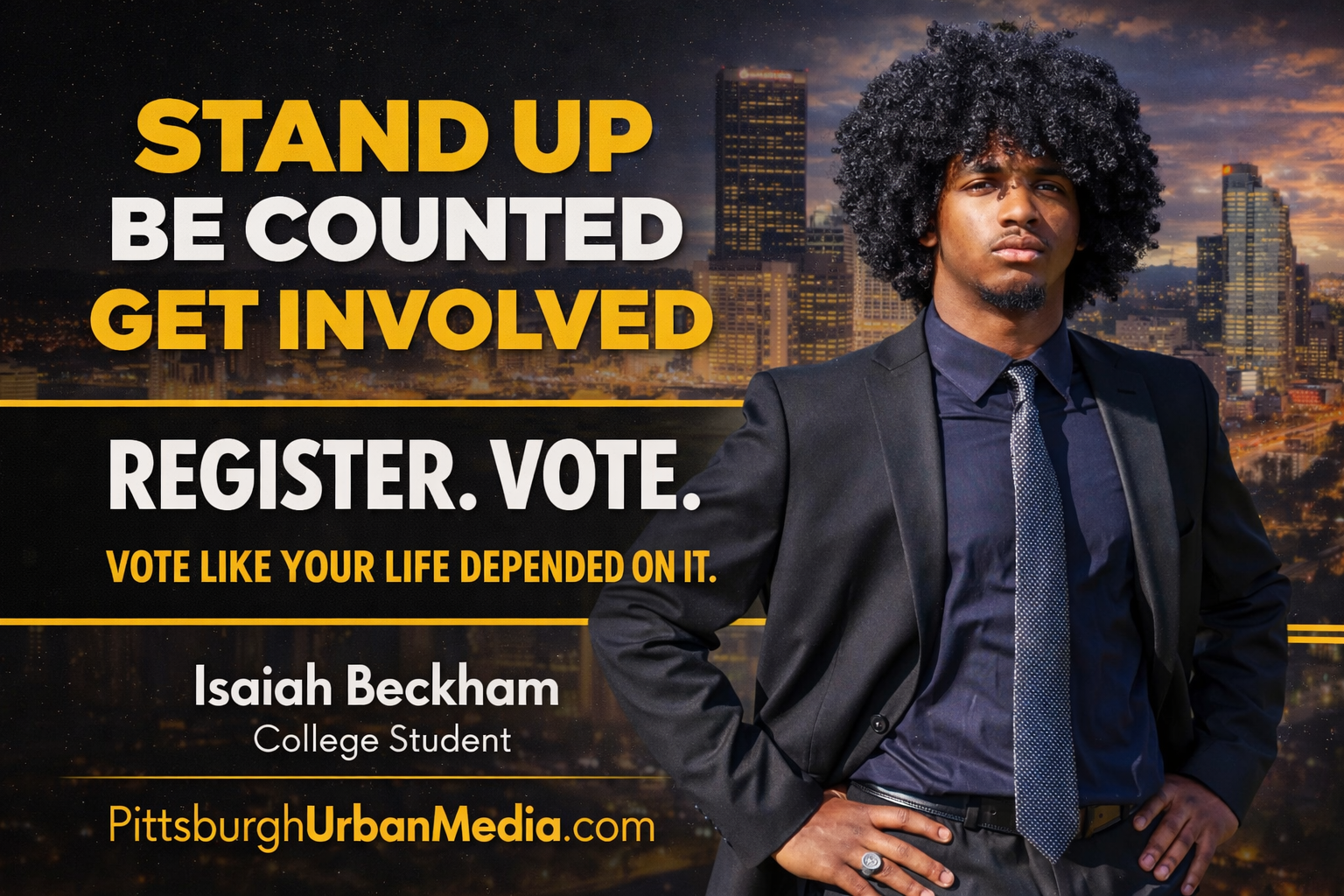
In 2026, Pennsylvania voters will decide key races for U.S. Senate, Governor, state legislature, and local offices. These elections shape education funding, housing policy, criminal justice reform, and economic opportunity for Black communities across the commonwealth. Every vote counts — and every race is winnable.

Key Election Dates
How to Vote in Pennsylvania
Register to Vote
You must be registered at least 15 days before Election Day. Register online at vote.pa.gov or in person at your county election office.
Check Your Registration
Already registered? Verify your registration status, polling place, and sample ballot at vote.pa.gov before Election Day.
Choose How to Vote
Vote in person at your polling place on Election Day, or request a mail-in ballot to vote from home. Both are valid options.
Know What's on Your Ballot
Research candidates and ballot questions ahead of time. PUM will publish voter guides for key races throughout the election season.
Make Your Plan
Decide when and how you'll vote. If voting in person, know your polling location. If voting by mail, track your ballot online.
Key Races to Watch
U.S. Senate
Pennsylvania's open Senate seat is one of the most competitive in the nation. The outcome will shape the balance of power in Washington and federal policy on healthcare, housing, and civil rights.
Governor of Pennsylvania
The governor controls the state budget, appoints judges, and sets the agenda on education, criminal justice, and economic development. This race will define Pennsylvania's direction for the next four years.
State Legislature
Control of the Pennsylvania House and Senate determines which bills become law. Local legislative races directly impact school funding, voting rights, and community investment.
Local & County Offices
District attorneys, judges, school board members, and county commissioners make decisions that affect daily life. These races are often decided by just a few hundred votes.
Voter Resources
Poll Work: A Lesson in Democracy
By Robin Beckham, Founder & Editor — PittsburghUrbanMedia.com · May 20, 2026
Growing up, I remember my grandma Cecilia always having one very important job — working the polls during elections. Watching her take that responsibility so seriously always stayed with me. I remember thinking to myself, "One day, I want to do that too."
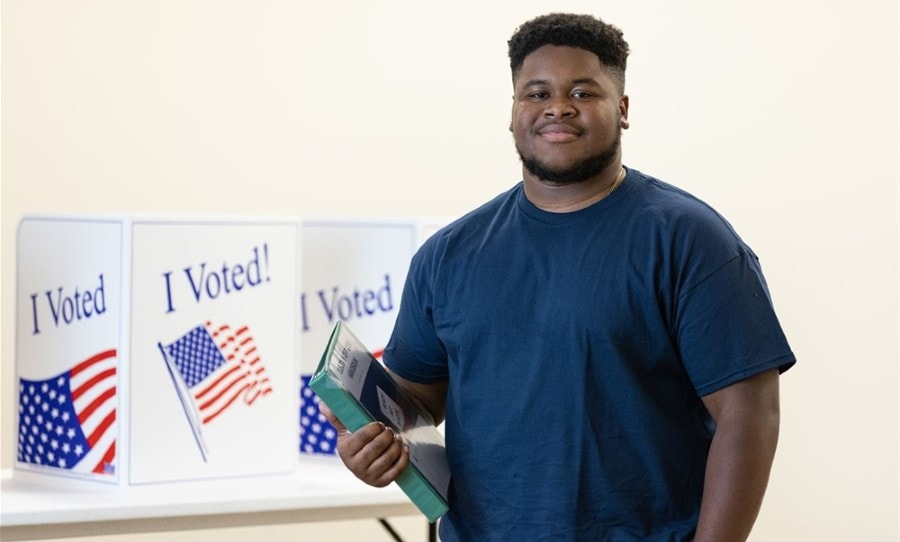
Yesterday, my son and I had the opportunity to do just that.
It was a full-circle moment for me, serving as poll workers in honor of my grandmother and the example she set through her actions. She showed me the importance of voting, civic responsibility, and participating in the democratic process. Through her leadership and example, I learned that your voice matters and your vote matters. I hope that through this experience, I am now passing those same lessons on to my children.
Yesterday, my son and I worked the voting polls, and it was truly an eye-opening experience. Our day started at 6 a.m. and didn't end until well after 8 p.m., but every moment was worth it.
I wanted my son to learn more about the voting process and gain a real understanding of how elections actually work beyond simply casting a ballot. What we both discovered was a process built around extensive checks and balances, accountability, and protecting every vote.
There is so much more involved than a person stepping up to vote. From the voting machines themselves, to the accounting procedures, verification systems, and safeguards in place, there are countless steps designed to protect the integrity of the election process.
I truly salute Allegheny County Elections Division and the systems they have in place to ensure every vote matters.
One of the biggest lessons we learned is how important it is for citizens to prepare before going to the polls:
- Verify your voter registration status
- Make sure your party affiliation is correct
- Know your polling location if you've moved
- Understand that independents do not vote in primary elections
- Update any name changes ahead of Election Day
I also learned that if there are questions regarding someone's eligibility or registration, provisional ballots are often available to help ensure voters still have the opportunity to have their vote counted.
The team I worked with yesterday was outstanding. They understood every aspect of setting up the machines, following procedures, and assisting voters throughout the day. Because of their preparation and professionalism, our entire 15-hour day ran smoothly without any major issues.
Working as a poll worker gave both my son and me a completely new appreciation for the election process and the people behind it. These individuals are dedicated, hardworking, and deeply committed to protecting one of the most important rights we have as Americans — the right to vote.
If you truly want to understand how elections work, I encourage you to consider becoming a poll worker during an upcoming election. It opens your eyes to how thoughtful, detailed, and sacred this process really is — and to the many people working behind the scenes to make sure every citizen can participate in democracy.
Your vote matters.
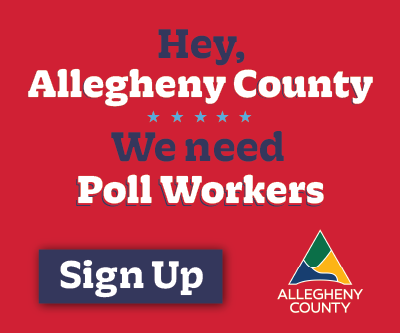
Sign up to be a poll worker:
Become a Poll WorkerGet Out the Vote
Share this page with your family, friends, and neighbors. Help us build the most informed, engaged Black electorate in Pennsylvania history.