Celebrating Black Heritage


Black History Month 2026 in PGH
Every February, the U.S. honors the contributions and sacrifices of African Americans who have helped shape the nation. Black History Month celebrates the rich cultural heritage, triumphs and adversities that are an indelible part of our country's history.
Black History Spotlight
Honoring Black Achievements
For Black History Month (BHM) 2026, the national theme is "A Century of Black History Commemorations," focusing on 100 years of honoring African American achievements and struggles, with celebrations happening across the U.S. in February, featuring events at cultural sites, schools, and community centers to reflect on Black history's impact, as noted by ASALH and History.com.
Key Aspects of BHM 2026:
- Theme: "A Century of Black History Commemorations" marks the centennial of national observances, as per ASALH.
- Focus: Exploring how these commemorations have transformed Black people's status in the modern world, notes ASALH.
- Activities: Expect events like exhibitions, book displays, lectures, and cultural programs in schools, museums, and community spaces, reports ASALH and History.com.

Dr. Samuel's Inspiration
Honoring Heritage at South Fayette
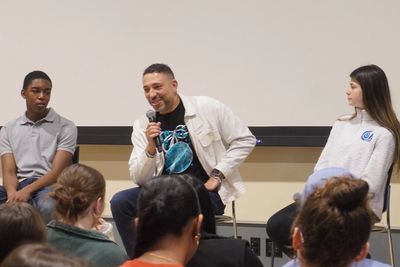
Students at South Fayette High School received a powerful lesson in resilience and redemption Thursday morning as Dr. Andre Samuel, founder of The Citizen Science Lab, shared his personal journey during a Black History Month event hosted by the school’s SHOUT organization.
The program, titled “Setback to Comeback: A Morning with Dr. Andre Samuel,” began with a screening of the first 16 minutes of Samuel’s documentary, setting the tone for an open and candid discussion about choices, discipline, accountability, and the power of second chances.
Samuel’s story is one marked by significant challenges. As an undergraduate student, he ran out of money for college, encountered legal trouble, battled addiction, and experienced homelessness. But he told students those moments did not define his future.
After finding a second chance in Pittsburgh through Duquesne University, Samuel transformed his life’s trajectory. What began as a small lab concept has grown into The Citizen Science Lab, a nonprofit organization now serving thousands of students by providing access to hands-on STEM education and research opportunities.
Throughout the morning session, Samuel fielded questions from students both during the group discussion and afterward in one-on-one conversations. He spoke candidly about personal responsibility, the importance of support systems, and the discipline required to move from setback to success.
His core message resonated strongly: “Your worst chapter is not your last chapter.”
School leaders praised SHOUT students for organizing the event in recognition of Black History Month, calling the discussion both meaningful and impactful for the school community.
The event underscored the importance of representation, perseverance, and community support — themes that align closely with Black History Month’s focus on resilience and achievement in the face of adversity.
Pittsburgh's Black Heritage
Honoring Black History in Pittsburgh
In 1788, when western Pennsylvania residents petitioned the General Assembly to create Allegheny County, four of the petitioners were free Black men.
In the 1800s, Pittsburgh was home to many stops on the Underground Railroad, and the neighborhood now called Lower Hill, then dubbed Arthursville, was a major stop. Railroad agents included barber John B. Vashon, believed to be the city’s wealthiest Black man at the time.
A century later, during the Civil Rights Movement, the corner of Centre Avenue and Crawford in Pittsburgh became known as Freedom Corner; it was the meeting point for protesters who marched on City Hall and Washington.
These are just a few of the many chapters of Black history in Pittsburgh, the city I live in and represent in the state House of Representatives. It’s history we must remember.
Unfortunately, our federal government is doing everything it can today to erase Black history.
In a textbook example of doublespeak, the Trump administration has taken many troubling steps to “restore truth and sanity” to American history. What that really means is they are squelching public spaces that explain our country’s legacy of racism to new generations.
“Not everything that is faced can be changed,” wrote James Baldwin, one of the great chroniclers of the Black experience in 20th century America. “But nothing can be changed until it is faced.”
It’s critical—especially at a point in time when the White House is mounting an all-out attack on diversity—that we face our history.
This month marks the 100th anniversary of Black History Month, which should be a time for us to remember our shared American story, but in Washington, D.C., it’s noticeably different this year.
President Trump opened Black History Month by posting a shameful, racist meme on his social media platform depicting former President Barack Obama and his wife, Michelle, as apes.
At the John F. Kennedy Center for the Performing Arts, which typically hosts an array of Black History Month programming but is now controlled by Trump, nothing whatsoever has been scheduled on Black history.
This comes a year after the president ordered the Smithsonian Institution and the Secretary of Interior to conduct a review to the end influence of what it calls “divisive, race-centered ideology.”
In Philadelphia, Trump’s order led to the recent dismantling of a slavery exhibit at the President’s House, which commemorated the Black people enslaved by President George Washington at Independence National Historical Park.
Columnist Jenice Armstrong of The Philadelphia Inquirer wrote that the removal of the slavery exhibit “hurts my soul,” and she added, “It would hurt President Donald Trump’s soul, too, if only he had one.”
Also in question has been the fate of a notable photograph of a whipped slave whose back is covered in thick scars after reports that the photo was ordered removed from a national monument in Georgia.
At national parks, the Trump administration has removed MLK Day and Juneteenth from the list of annual free-entry days. Yet it added to the list Trump’s birthday, which falls on Flag Day.
There are still institutions committed to preserving Black history, and we must continue to support them. I recently accepted an appointment as a board member at one of these institutions, the Heinz History Center in Pittsburgh, and I’m proud to have done so.
Heinz History Center exhibits include “From Slavery to Freedom,” which covers 250 years of African American life and history and the fight for civil rights in Pittsburgh. It’s an in-depth exhibit where visitors can learn about Pittsburghers such as Maj. Martin L. Delany, who during the Civil War became the highest-ranking Black field soldier in U.S. history, and Daisy Lampkin, a civil rights activist and leading organizer in the Women’s Suffrage Movement.
They are part of the real story of America’s diversity, a story that is painful, heroic, and complicated—but certainly worth preserving.
State Rep. Aerion A. Abney represents Allegheny County’s 19th Legislative District.

State Rep. Aerion A. Abney
D-Allegheny
Black History Matters
The Importance of Black History
“I am an invisible man. No, I am not a spook like those who haunted Edgar Allen Poe:
Nor am I one of your Hollywood movie ectoplasms. I am a man of substance, of flesh and bone, fiber and liquids, and I might even be said to possess a mind. I am invisible, simply because people refuse to see me. …Like the bodiless heads you see sometimes in circus sideshows, it is as though I have been surrounded by mirrors of hard, distorting glass. When they approach me they see only my surroundings, themselves or figments of their imagination, indeed, everything and anything except me.” (From The Invisible Man by Ralph Ellison)
Black History Month is needed in 2026 as much as it was when Dr. Carter G. Woodson started Black History Week in 1926. As noted by Dr. Latasha Levy in her January 26, 2026 article (The Early Black History Movement Didn't Ask for Permission), “Woodson understood that his training among the most renowned white scholars in the nation was replete with racist stereotypes and lazy conjecture when it came to people of African descent. He dedicated his life to undermining the intellectual folly and racist dismissal of Black people in the historical profession. …Of greater significance, he redefined what it meant to be an ‘intellectual’ by encouraging ordinary men and women (and children) to become the gatekeepers of their own history…”
One hundred years after the founding of Black History Week, the need for Blacks to be the gatekeepers of their history was underscored when, in January 2026, “The National Park Service began removing a slavery memorial at the President’s House in Philadelphia on Thursday afternoon -- an exhibit that opened in 2010 and honored the lives of the nine people held there who were enslaved by President George Washington.” (See, Trump admin removes memorial honoring people enslaved by George Washington in Philadelphia - ABC News (https://abcnews.go.com/US/trump-admin-removes-memorial-honoring-people-enslaved-george/story?id=129472615)). If further evidence is required regarding why we must be vigilant during Black History Month, one needs to look no further than the coordinated business, government, and education attack on Diversity, Equity and Inclusion (See, https://www.mapresearch.org/2024-dei-report). To put the need for Black History Month in bold relief, consider the following personal examples related to Ralph Ellison’s above account of invisibility.
During the 1960s, to underscore the pervasive, institutionally ingrained, and resistant to change nature of White racism, Malcolm X asked rhetorically, “What do you call a Negro with a PhD?” to which he bluntly answered, “a Nword.” In the immediate instance, I earned a PhD from the University of Pittsburgh in 1968. Many years later, I retired from the University of Pittsburgh as Vice Provost and Distinguished Service Professor Emeritus. My wife too earned her doctorate from the University of Pittsburgh, served as a tenured faculty member there, and eventually retired after serving as the CEO of her national professional association. Notwithstanding our considerable receipts regarding advanced educational attainment, senior administrative careers and public service, the following recent microaggressions reminded us of who some believed us to be.
We were aboard one of the largest modern cruise ships and had gotten “lost” in the comfort of an Owner’s Suite, daily temperatures in the 80s, fine dining, a reenactment of a Broadway Show, etc. One evening, enroute to a specialty diningrestaurant, a White woman walked up to me and asked if I had played in the NBA. She also stated that her husband thought he remembered me as an NBA player. I answered, “No, I made Distinguished Service Professor at Pitt.” As a true “Karen,” she turned red-faced and looked at me as if to say, “Nword,” you are crazy.” –as if I had CTE, not that she and her husband were engaged in gross stereotyping.
On the above cruise, we showed up for a dinner reservation at the highest-class specialty restaurant. Without welcoming us, the maître d immediately said, “You need a reservation to dine here, and there is an additional fee to dine here.” My wife snapped, “Why are you telling us that? I made and paid for a reservation before boarding the ship.” Still steeped in his false perceptions of us, the maître d turned, went over to a computer, checked records and, subsequently, returned and apologized profusely. In sum, two Negroes each with a PhD and a national professional reputation added up to two “Nwords” while cruising, even though they probably had more advance education than those who stereotyped them.
To offset the invisibility that Blacks continue to experience, we must control our historical narratives in an ongoing fashion, not just during Black History Month. We must, first and foremost, be visible to ourselves for ourselves. We must, for example,have a deep understanding and abiding appreciation for the following words from Maya Angelou:
“You may write me down in history
With your bitter, twisted lies,
You may trod me in the very dirt
But still, like dust, I'll rise…
Did you want to see me broken?
Bowed head and lowered eyes?
Shoulders falling down like teardrops,
Weakened by my soulful cries?
…You may shoot me with your words,
You may cut me with your eyes,
You may kill me with your hatefulness,
But still, like air, I’ll rise…”
In an ongoing fashion, Blacks must tell their history of not just surviving, but rising to achieve at the highest levels throughout all aspects of life. We are, for example, [1] aerospace engineers, athletes, accountants, artists, auto mechanics, actors, astronauts, and academicians; [2] poets, pilots, politicians, plumbers, psychiatrists, public health professionals and preachers; and, [3] “quiet as it is kept,” have served as President and Vice President of the United States of America!
Jack L. Daniel
Co-founder, Freed Panther Society
Contributor Pittsburgh Urban Media
Author, Negotiating a Historically White University While Black
February 4, 2026

Jack L. Daniel
Co-founder, Freed Panther Society
Contributor Pittsburgh Urban Media
Meet Darren Roberts
Darren Roberts: Pittsburgh’s Business Leader
Darren Roberts was born in Santa Cruz, Trinidad & Tobago, and migrated to the United States in 1998 to pursue higher education. He earned a Bachelor’s degree in Accounting from Bentley University and a Master’s degree in Finance from the University of Phoenix. After spending 15 years with McDonald’s Corporation in leadership and consulting roles across the Boston and New York Metro Regions, Darren transitioned into ownership in Pittsburgh, where he became a McDonald’s Owner/Operator in 2016. Today, he proudly owns and operates four McDonald’s restaurants in the Pittsburgh market and has served in key leadership roles, including four years as Chair of the Black McDonald’s Operators Association (BMOA) for Pittsburgh.
Deeply invested in Pittsburgh’s communities, Darren is passionate about creating opportunity, supporting cultural initiatives, and giving back locally. He has been a longtime supporter of Juneteenth celebrations and community events in Pittsburgh, while also maintaining strong ties to Boston and his hometown of Santa Cruz, Trinidad. Darren has been married to his wife, Lisa, a Boston Police Officer, for 30 years, and together they raised two college-educated children. His vision remains focused on growing a strong Pittsburgh-based business while uplifting communities through mentorship, youth empowerment, and service.
Darren Roberts: A Black History Month Conversation on Business, Purpose, and Pittsburgh
Q: You were born and raised in Santa Cruz, Trinidad & Tobago. How did your upbringing there shape your mindset around hard work and opportunity?
Mr. Roberts: Growing up in Santa Cruz, Trinidad & Tobago instilled in me the values of respect, strong family ties, and the belief that hard work truly pays off. Education was always emphasized, and I was surrounded by a close-knit community where neighbors supported and looked after one another. That sense of collective responsibility and encouragement shaped my character in lasting ways. Many of the lessons that guide me today came from that village environment, and I remain committed to supporting the growth and development of youth there.
Q: What led you to immigrate to the United States, and how did those early years influence your ambition and resilience?
Mr. Roberts: I came to the United States in pursuit of greater educational and career opportunities. I earned an associate degree in Accounting from Roxbury Community College, a bachelor’s degree in Accounting from Bentley University, and a master’s degree in Finance from the University of Phoenix.
During college, I joined INROADS, which provided internships with Fortune 500 companies. Those experiences introduced me to corporate culture, professional expectations, and the power of networking and mentorship. It was during this time that I began setting clear life goals and building the resilience needed to achieve them.
Q: You spent 15 years working in various leadership roles at McDonald’s before becoming an Owner/Operator. Why was it important for you to fully learn the business before pursuing ownership?
Mr. Roberts: I always knew I wanted to own a business, and I’ve long been passionate about the food industry. My career with McDonald's allowed me to gain leadership experience across finance, operations, training, and technology. That broad foundation gave me a deep understanding of the business and confirmed my desire to become an Owner/Operator.
I also sought hands-on restaurant experience by working alongside Owner/Operators Jeff Brewster and Jim Roberts, who mentored me and allowed me to learn directly inside their restaurants. When I first applied for ownership, I was turned down because I did not yet have the required capital. Instead of giving up, I doubled down on my career, savings, and investments while studying franchising and business ownership more deeply. In September 2016, I finally achieved my goal and became an Owner/Operator in Pittsburgh. My wife Lisa, my children Britney and DJ, and the community I grew up in were all major sources of inspiration and motivation.
Q: You held roles spanning finance, operations, technology, and training. How did that breadth of experience prepare you for owning and operating multiple restaurants?
Mr. Roberts: That range of experience gave me a strong and confident start as a new business owner. My financial background helps me focus on profitability and growing market share, while my operational and training experience supports team development and execution. Expanding my organization has brought both successes and challenges. One early hurdle was relocating to Pittsburgh without an established local support network, which required me to quickly build relationships and credibility in a new market.
Q: Becoming a McDonald’s Owner/Operator is highly competitive. What did it take—professionally and personally—to reach that milestone?
Mr. Roberts: It required clear goal-setting, strong mentorship, and a willingness to invest both time and resources into professional development and networking. I worked diligently to build the financial foundation necessary for ownership and sought guidance from experienced Owner/Operators and advocates within the system. Just as important was the unwavering support of my family—my wife Lisa, my children, and my extended family—who believed in the vision and stood by me throughout the journey.
Q: What were some of the toughest challenges you faced in transitioning from corporate leadership to entrepreneurship?
Mr. Roberts: The transition was both exciting and challenging. I moved to Pittsburgh with no local roots, no permanent housing, and no established support base. My last day as a McDonald’s corporate employee was September 15, 2016, and my first day as an Owner/Operator was the very next day. I lived in a hotel for the first month while building my business from the ground up.
Another major challenge was shifting from a corporate perspective to full financial responsibility as an owner. While my corporate experience was invaluable, managing every financial obligation firsthand required a new level of fiscal discipline and decision-making.
Q: Today, you operate four McDonald’s restaurants in the Pittsburgh market. What does success look like for you at this stage of your journey?
Mr. Roberts: Success means developing my employees and showing them that they can achieve more in life by setting goals and staying focused. I see my role as a mentor, especially for young people, helping them understand the value of education and the opportunities available through our restaurants. From a business perspective, success also means continuing to grow profitably, increasing market share, and creating future leadership opportunities within my organization.
Q: As one of the few African American McDonald’s owners in Pittsburgh, what does ownership represent to you—especially during Black History Month?
Mr. Roberts: Black History Month is a meaningful time to reflect on the sacrifices and achievements of those who paved the way for opportunities like mine. Ownership represents both progress and responsibility. I feel a deep obligation to succeed so that my children, my family, and the young Black employees I work with can see what is possible through perseverance and hard work.
Q: Why is Black ownership within major global brands like McDonald’s still so important in 2024 and beyond?
Mr. Roberts: Black ownership in global brands is important not only for representation but also for economic impact. It helps address wealth gaps, supports job creation, and strengthens local communities. Owners who understand the unique challenges of underserved communities are often well-positioned to provide employment, mentorship, and community investment. Representation within major brands also sends a powerful message to future generations about what is achievable.
Q: What advice would you give to aspiring Black entrepreneurs who may feel discouraged by the barriers to entry in large-scale business ownership?
Mr. Roberts: Don’t be discouraged. Seek out mentors and connect with organizations like the National Black McDonald's Owners Association, where experienced Owner/Operators are willing to share guidance and encouragement. The process can be challenging, but mentorship and preparation can make a significant difference.
Q: You’ve emphasized creating career pathways for your employees. Why is mentorship and workforce development such a priority for you?
Mr. Roberts: Mentorship and workforce development are important because they help employees recognize and take advantage of the opportunities available to them. I want my team members to stay focused on growth, build confidence in their abilities, and use their skills and knowledge to advance both professionally and personally.
Q: Community involvement has been a consistent part of your journey—from Juneteenth events in Pittsburgh to back-to-school initiatives in Boston and Trinidad. Why is giving back non-negotiable for you?
Mr. Roberts: The communities where I operate have strongly supported the McDonald’s brand, and giving back is a way to show gratitude and partnership. For the past eight years, I’ve supported Juneteenth events in Pittsburgh, which promote community unity and economic empowerment. Supporting causes that matter to our customers and neighborhoods is an essential part of responsible business leadership.
Q: Your annual back-to-school event in Trinidad is deeply personal. What does it mean to reinvest in the community where your story began?
Mr. Roberts: As a former student of Santa Cruz R.C. School, giving back to that community is very personal. These events help students and families prepare for the school year while fostering community spirit and recognizing young people as future leaders. We also provide motivational talks to encourage students to strive for success. It’s important to me that they have a real opportunity to reach their full potential.
Q: How has your family supported you throughout your journey, and what role do they play in your continued success?
Mr. Roberts: My family has been my greatest source of strength. My wife, Lisa, a Boston Police Sergeant nearing retirement, has been my strongest advocate and strategic partner as we build our family legacy. My daughter Britney, a professional educator focused on special needs students, is a strong supporter of the business and spends time with me in Pittsburgh. My son, Darren Jr., a graduate of the University of Miami with a degree in Economics, worked in the restaurants during his summer breaks and gained valuable financial and operational experience. He currently works in hedge fund compliance in Miami and hopes to join the family business in the future.
Q: Looking ahead, what do you hope the future holds for Black McDonald’s owners and for the next generation of entrepreneurs coming behind you?
Mr. Roberts: I hope future Black Owner/Operators continue to have a level playing field and equal opportunities for success. Black Owners must understand what they are getting into and seek out advice to insure they will achieve financial success.
Q: When people see your story, what do you hope it inspires them to believe about what’s possible?
Mr. Roberts: I hope my journey shows that with perseverance, education, mentorship, and faith in yourself, it is possible to achieve goals that may once have seemed out of reach.

McDonald’s Owner Darren Roberts
Black History Message from Gov. Shapiro
Pennsylvania's Leadership on Black History
"Black Pennsylvanians have not only helped build our nation, they’ve helped move our Commonwealth forward and make progress for all of us.
While Donald Trump attempts to whitewash our history, I want every Black Pennsylvanian to know that you will always have a place here in our Commonwealth — and that we respect and learn from our history here, even when it’s painful.
As we celebrate a century of Black history commemorations this Black History Month, let us learn from our past and keep working to advance real freedom for everyone in our Commonwealth."
Pa Gov. Josh Shapiro

Pursuing Light: The Vision and Journey of Bill Strickland
Bill Strickland: A Pittsburgh Icon
Bill Strickland - visionary artist, educator, civil rights leader and Pittsburgh hero - is the subject of a new documentary.
Pursuing Light: The Vision and Journey of Bill Strickland by Karen Somers +Co and Wayfarer Studios showcases how Bill transformed his lived experience into a revolutionary philosophy that has reshaped education, workforce development and poverty alleviation around the world.
The film airs on WQED throughout February. Learn more and see the broadcast schedule here: https://www.wqed.org/pursuing-light-bill-strickland/
About the Film
Pursuing Light: The Bill Strickland Story is a documentary about the power of beauty, belief, and opportunity to transform lives. It is a rags-to-riches story rooted not in luck, but in purpose — following Bill Strickland, an artist, educator, civil rights leader, and visionary who has spent his life proving that talent is universal, even when opportunity is not.
Moving fluidly through time, the film weaves Bill’s extraordinary personal journey with the lives of the young people and adults he serves through his revolutionary network of youth arts and workforce training centers. These are places where excellence is expected, beauty is non-negotiable, and dignity is the foundation. Bill’s audacious goal — to eradicate systemic poverty in America, and eventually the world — may seem impossible. Yet his schools are beating the odds, one student, one community at a time.
At the heart of Bill’s philosophy is a belief that beautiful, high-expectation environments create beautiful outcomes-when people are treated with dignity and excellence, they rise to meet it. This belief is powerfully reinforced by science.
Dr. Chan M. Hellman, Professor of Social Work at the University of Oklahoma and Director of the Hope Research Center, brings research-based evidence to Bill’s lived wisdom. Through decades of study and more than 150 scientific publications, Dr. Hellman demonstrates that hope is a measurable psychological strength-one that helps children and adults overcome trauma, adversity, and generational poverty.
Together, Bill’s philosophy and Chan Hellman’s research reveal a powerful truth: hope, when paired with opportunity and excellence, changes outcomes.
The film takes us on the road with Bill as he does what he loves most — showing up and connecting. From New Haven, Connecticut to Sharon, Pennsylvania; from the Boston Suffolk County Jail to Akko, Israeli we witness the universal challenges of low-income communities and the extraordinary transformations that occur when people are seen, supported, and expected to succeed.
Pursuing Light: The Bill Strickland Story is not just a film.
It is an invitation.
An invitation to reimagine education. To rethink workforce development.
To believe that poverty is not inevitable — and that solutions already exist.
Black History Month
Resistance & Activism: Sala Udin Doc & Q&A
February 28 @ 1:30 pm - 3:00 pm
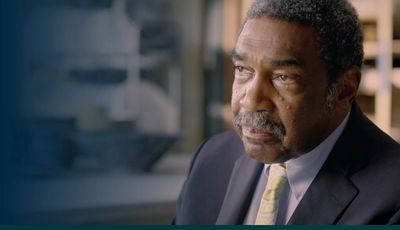
The Price of Resistance follows Sala Udin’s fearless activism, chronicling his battles with injustice, FBI surveillance, and unwavering leadership in the civil rights movement and beyond. Q & A with the filmmakers to follow screening.
This program is part of our Black History Month 2026 programming.
DETAILS
- Date:February 28
- Time:1:30 pm - 3:00 pm
- Event Category:Film Screening
VENUE
- CLP – Homewood
- 7101 Hamilton Ave
Pittsburgh, 15208 United States + Google Map - Phone412.731.3080
ORGANIZER
- Carnegie Library of Pittsburgh
- Phone412-622-3114
- Emailinfo@carnegielibrary.org
- View Organizer Website
OTHER
Age Group Adults

Celebrating PA’s Black History
PA's Historic Underground Railroad Stops
With Black History Month underway, it’s an important time to reflect on the significant achievements of Black Pennsylvanians and the pivotal moments in Black history and culture rooted right here in the Commonwealth—especially as the Trump administration aims to whitewash certain aspects of US history, as evidenced by the removal of the slavery exhibit from Independence Mall in Philadelphia.
To start, we’re highlighting Pennsylvania’s vital role in the Underground Railroad, the network of secret routes and safe houses that helped Black Americans escape enslavement. As the first free state north of the Mason-Dixon line, Pennsylvania provided many entry points to freedom.
Although it was loosely organized, the state’s network of “stations” on the Underground Railroad was extensive, according to historians. The Network to Freedom is the National Park Service’s preservation of sites related to the Underground Railroad and currently contains more than 60 locations in Pennsylvania.
Go to this link to learn more about these historic sites from the Keystone.
The Vashon family
Black History Month 2026 in Pittsburgh
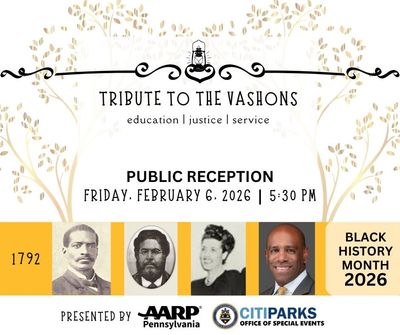
In February, the City of Pittsburgh celebrates Black History Month by honoring the spirit and heroism of the Vashon family, highlighting the enduring legacy of abolitionists and activists of the 1800s. Their impact continues to motivate contemporary movements for justice and equality, underscoring that the quest for human rights remains an ongoing journey through education, advocacy, and activism.
Details posted on website: https://www.pittsburghpa.gov/Recreation-Events/Special-Events/Black-History-Month
Elements of the monthlong celebration will include:
- Display in City-County Building grand lobby Feb 6 – 28
- Online content Feb 6 – 28
- Opening Reception on Friday, Feb 6, at 5:30 pm in City-County Building grand lobby
This celebration showcases one of the most important families in the City of Pittsburgh during the building of our nation.
Businessman John B. Vashon -- born in 1792 in Virginia to a free Black woman and her former enslaver’s son -- settled in Pittsburgh after serving in the War of 1812. He was a conductor for the Underground Railroad, assisting formerly enslaved people to freedom. The prosperous Downtown Pittsburgh barber and bath house owner was a founder of the Pittsburgh Anti-Slavery Society and helped establish the city’s first school for Black children.
His daughter, Mary Frances Vashon Colder, became one of the first African American female journalists in the United States.
His son, George Boyer Vashon, who grew up largely in Pittsburgh, became the first Black graduate of Oberlin College and the first Black lawyer admitted to the New York Bar. George was an educator and poet, and he contributed regularly to Frederick Douglass’ North Star publication.
George was denied admission to the Pennsylvania Bar due to his race, but in 2010, his great-grandson, Nolan N. Atkinson Esq. -- then chief diversity officer, City of Philadelphia, and 1967 graduate of the Howard University School of Law -- successfully petitioned to have George Boyer Vashon posthumously admitted to the Pennsylvania Bar.
Now in 2026, John B. Vashon’s great, great, great grandson Paul N.D. Thornell, an attorney, carries on the family’s legacy by serving in leadership roles in the White House, Capitol Hill, Presidential campaigns, financial services sector and non-profit organizations.
ART meets ICE
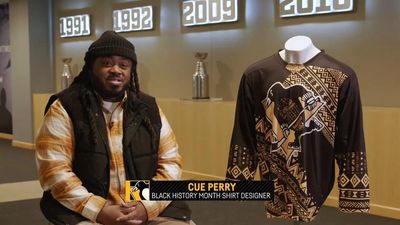
Art Meets Ice: Perry's 2026 Jersey Design
Cue Perry's design for the Pittsburgh Penguins' 2026 Black History Month jersey was primarily inspired by African heritage, culture, resilience, and legacy. Specifically, he incorporated several elements:
- African Daishiki influence: Perry noted that the hockey shirt's shape already resembled an African Daishiki and leaned into that aesthetic.
- Mud Cloth Markings: He heavily incorporated patterns from African mud cloth, which in African culture is traditionally worn by hunters and warriors for protection, good luck, and goodwill. This element was also a personal homage to his father, who frequently wore mud cloth.
- Tribal Markings and Symbols: The design features various African tribal markings and symbols to pay respect to African ancestry and to allow the "African Penguins" community to wear their heritage with pride.
Learn More: https://www.facebook.com/reel/1639765577014111
In 2026, Pittsburgh-based artist and educator Quentin "Cue" Perry partnered with the Pittsburgh Penguins as the winner of the Black History Game Heritage Series. Key details of the collaboration include:
- Jersey Design: Perry designed the official Black History Month jersey and hockey shirt for the team.
- Design Inspiration: His artwork for the project was inspired by African heritage, resilience, and culture.
- Commemorative Event: The Penguins recognized the collaboration during their Black History Month game on February 2, 2026.
- Fan Promotion: The first 400 fans who purchased a special ticket package for the February 2nd game received a limited-edition hockey shirt featuring Perry's design.
Perry is a well-known local figure who serves as a Creative Arts Advisor for Propel Schools and is recognized for his portraits and murals.
Feb 02, 2026 7:00 PM EST
Black History Game Special Ticket Package
Join us February 2 as we recognize Black History Month with special guests, videos, performances and concourse displays!
All fans in attendance will receive a Black History Rally Towel presented by CNX. Plus, the first 400 community members that purchase tickets through this offer will receive a Black History Hockey Shirt!
Click ‘Get Tickets’ and select your preferred section to get started!
Bringing a group of 10 or more? Please contact Olivia Stawovy at (412) 255-1811 to learn about unique fan experiences and save on online fees!
Pittsburgh Penguins vs. Ottawa Senators
Feb 02, 2026 7:00 PM ESTPPG Paints Arena 1001 Fifth Avenue, Pittsburgh, PA 15219,
Black History Month Lecture
Black History Month Talk: Deborah Willis
DATE & TIME Friday, Jan. 30, 2026
6:00 PM - 7:30 PM
LOCATION Heinz History Center 1212 Smallman Street
Pittsburgh PA, 15222
TICKETING
$10 General Admission
$5 Members
This year’s program features Deborah Willis, Ph.D., one of the nation’s leading historians of photography and author of the groundbreaking, “Reflections in Black: A History of Black Photographers 1840 to the Present.”
In recognition of the 25th anniversary of “Reflections in Black,” Willis will reveal stories about the photographers and artists whose work reshaped how Black life has been seen, and too often overlooked, in mainstream culture. Her scholarship also connects deeply to Pittsburgh’s own photographic legacy, including the nationally significant work of Charles “Teenie” Harris, whose images of Black life in Pittsburgh stand remain among the most celebrated and influential in American photography.
A MacArthur Genius Fellow and Guggenheim Fellow, Willis serves as professor and chair of the Department of Photography & Imaging at NYU’s Tisch School of the Arts and directs NYU’s Center for Black Visual Culture/Institute for African American Affairs. Her research explores photography’s multifaceted histories, visual culture, contemporary women photographers, and evolving representations of beauty.
Drawing on her decades of expertise, Willis will explore how photography has captured the depth, creativity, and complexity of the Black experience across generations.
A Q&A book signing will follow the presentation.
Admission
Tickets are $10 for non-members and $5 for members. This program will take place in the Mueller Center on the museum’s fifth floor. Not a member? Join today to receive discounted admission.
American Sign Language (ASL) interpretation is available upon request. Please contact programs@heinzhistorycenter.org in advance to request accommodations.
About the Speaker
Deborah Willis Ph.D. is a photography historian and author of “Reflections in Black: A History of Black Photographers, 1840 to the Present.” She is a MacArthur Genius Fellow and a Guggenheim Fellow, a New York University (NYU) Professor and Chair of the Department of Photography & Imaging at the Tisch School of the Arts, and the director of NYU’s Center for Black Visual Culture/Institute for African American Affairs.
About the Black History Month Lecture
The Black History Month Lecture showcases historians, scholars, academics, filmmakers, curators, and literary artists who have recently published new work offering audiences the opportunity to engage directly with their research and creative practice. Since 2014, the series has welcomed speakers such as Sylviane Diouf, Tera Hunter, Claude Johnson, Leonard Moore, Sowande Mustakeem, Nicole Fleetwood, and David Dennis, Jr. It continues to serve as a platform for scholars and creators to share their work with a broad Pittsburgh audience.

Trailblazing in Hockey
Laila Edwards: A Historic US Olympic Debut
Laila Edwards set to become first Black woman to play Winter Olympic ice hockey for Team USA
The 21-year old University of Wisconsin final year student Laila Edwards has been included in Team USA's 23-player roster for Milano Cortina 2026
Laila Edwards is set to make history as the first African-American woman to play Winter Olympic ice hockey for Team USA, after she was included in the 23-player roster for Milano Cortina 2026.
“It still hasn’t really kicked in yet. Getting that call is like a dream come true,” Edwards told the Associated Press.
“Always had dreams of playing in the pros, but the biggest dream was to go the Olympics, for sure.”
Laila Edwards' quick rise
In just a few short years, Edwards has quickly risen to become one of Team USA's top ice hockey talents, making quite the history along the way.
She became the youngest American to win the Most Valuable Player (MVP) award at the women’s hockey world championships when she was 20 years old and helped the USA to their 11th title last April.
A rare two-way player who can contribute in both defence and as a forward, the 1.85m tall (6 ft) Cleveland Heights native, had made her national team debut two years prior, at just 19, becoming the first Black woman to play for the US women’s hockey team and subsequently the first Black woman to win the IIHF Women’s World Championship.
Source: Olympics.com
Local Hero: Sailor of the Year from Pittsburgh
By Lt. j.g. Taylor Worley, Navy Office of Community Outreach
Petty Officer 1st Class Autumn Caluya, a native of Pittsburgh, Pennsylvania, was recently named Sailor of the Year aboard the guided-missile cruiser, USS Gettysburg, and was chosen as Carrier Strike Group (CSG) Eight’s Sailor Shout Out.
CSG-8, based in Norfolk, Virginia, is highlighting the sailors whose skill, courage and ingenuity drive mission success every day. Lethality at CSG-8 begins with its sailors, because there is no substitute for trained, trusted and ready sailors.
Caluya graduated from City Charter High School in 2015 and has served in the Navy for 10 years as an interior communications electrician. Additionally, Caluya earned a bachelor’s degree from the University of Maryland in 2024.
As USS Gettysburg’s 2025 Sailor of the Year, Caluya led a team of 25 sailors and was responsible for ensuring those sailors were properly trained, qualified and supported to safely operate and maintain the ship’s combat systems.
Caluya redesigned the command’s Sailor 360 training program, creating a comprehensive plan that covered leadership development, mentorship and professional growth for more than 250 junior sailors.
Under Caluya’s leadership, sailors advanced in rank, earned awards and warfare qualifications, reenlisted and completed professional certifications, strengthening the command’s overall readiness.
When asked what the recognition meant, Caluya emphasized humility and responsibility.
“Truth be told, I am not much for receiving recognition or attention,” Caluya said. “I just try to do my job to the best of my abilities and look after my fellow sailors on the deckplates.”
Caluya added that while the recognition was meaningful, it reinforced the work still ahead.
“I am flattered to be recognized as Sailor of the Year, but I know that we as a command, and the Navy at large, have so much more work to accomplish,” Caluya said.
Caluya credited mentorship as a key factor in success.
“I want to give proper credit to my mentors, Master Chief Petty Officer Doug Shook and Chief Fire Controlman Daniel Regan,” Caluya said. “Without them, I would be lost among the stars.”
Carrier strike groups are the cornerstone of the Navy’s forward presence through sea control and power projection.
CSG-8 consists of the flagship, USS Harry S. Truman; Carrier Air Wing 1; staffs from CSG-8; the Ticonderoga-class cruiser USS Gettysburg; and two Arleigh Burke-class guided-missile destroyers, USS Stout and USS Cole. CSG-8’s mission is to conduct prompt and sustained combat, incident to operations at sea, by building and employing a trained, ready carrier strike group prepared when called upon to achieve the warfighting objectives of any assigned joint force or fleet commander worldwide.
USS Gettysburg is homeported in Norfolk, Virginia, and provides air defense, surface warfare and command-and-control capabilities in support of carrier strike groups and independent deployments.
This year, the Navy is commemorating its contributions to the nation’s defense as the United States celebrates 250 years of independence.
According to Navy officials, for more than 250 years, the Navy has sailed the globe defending freedom and protecting prosperity.
With 90% of global commerce traveling by sea and internet access relying on secure undersea fiber-optic cables, Navy leaders emphasize that the prosperity of the United States is directly linked to recruiting and retaining talented people from across the country.
USS Gettysburg’s 2025 Sailor of the Year,
Honoring Black Pittsburgh's Roots
Black Pittsburgh's Memorial Day Legacy
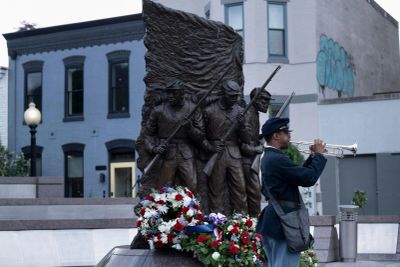
Long before Memorial Day became a national holiday marked by backyard cookouts and parades, Black communities in Pittsburgh and across Western Pennsylvania were honoring sacrifice, freedom, and military service with solemn remembrance ceremonies rooted in the struggle for liberation itself.
During the Civil War, Black Pittsburghers answered the call to fight for a nation that had not yet granted them full citizenship. Thousands of African Americans from Pennsylvania enlisted in the United States Colored Troops (USCT) and the U.S. Navy, risking their lives to end slavery and preserve the Union. Many traveled from communities throughout Western Pennsylvania—including Allegheny County, Beaver County, Washington County, and beyond—to join regiments that would become central to the Union war effort.
For Black soldiers, the war was never only about preserving the Union. It was about freedom, dignity, and proving their humanity in the face of racism, segregation, and exclusion. These men fought in some of the Civil War’s bloodiest campaigns while often receiving lower pay, fewer resources, and unequal treatment compared to white soldiers.
Yet despite these injustices, Black troops distinguished themselves with extraordinary courage.
The Early Roots of Memorial Day
After the Civil War ended, Black communities became some of the earliest guardians of remembrance traditions that would later evolve into Memorial Day.
Originally known as Decoration Day, these observances involved decorating the graves of fallen soldiers with flowers, flags, and prayers. In many cities—including communities connected to Western Pennsylvania—Black veterans and families organized ceremonies to honor Union soldiers who died fighting slavery.
Surviving members of the USCT marched in commemorative parades, often wearing faded uniforms and carrying the memory of comrades who never returned home. Early Black veterans also helped establish local chapters of the Grand Army of the Republic, one of the nation’s most influential Union veteran organizations.
For African Americans, remembrance was deeply personal. Memorial gatherings were not only acts of patriotism—they were declarations that Black sacrifice mattered in a country still struggling to recognize Black citizenship and equality.
Western Pennsylvania’s Legacy of Service
The contributions of Black veterans from Western Pennsylvania did not end with the Civil War. Their service laid the groundwork for generations of activism and leadership throughout the region.
From the battlefields of the Civil War to the segregated units of World War I and World War II, Black Pittsburghers continued serving despite discrimination at home and abroad. Veterans returned to neighborhoods like the Hill District carrying not only military experience, but also a sharpened determination to fight injustice.
Their leadership helped shape Pittsburgh’s civil rights movement, labor organizing efforts, and campaigns for equal housing, education, and employment opportunities.
Military service became intertwined with community activism. Black veterans often stood at the forefront of efforts to challenge segregation, advocate for voting rights, and demand equal treatment in public life.
A Legacy That Lives On
Today, Memorial Day carries a deeper meaning when viewed through the lens of Black history in Pittsburgh and Western Pennsylvania.
It is a reminder that African Americans fought for freedoms they themselves were denied. It honors soldiers who defended democracy overseas while battling racism at home. And it recognizes generations of Black veterans whose courage helped shape both the nation and the ongoing struggle for civil rights.
As flags are raised across cemeteries and communities this Memorial Day, Western Pennsylvania remembers the Black soldiers, sailors, veterans, and families whose sacrifices helped redefine America.
Their legacy is not only preserved in military records or monuments—it lives on in the continuing pursuit of justice, equality, and remembrance throughout Pittsburgh and beyond.