
Target has apologized, pulled a children's Halloween costume from sale and acknowledged that its own product-approval process failed.
But the apology may be only the beginning of the story.
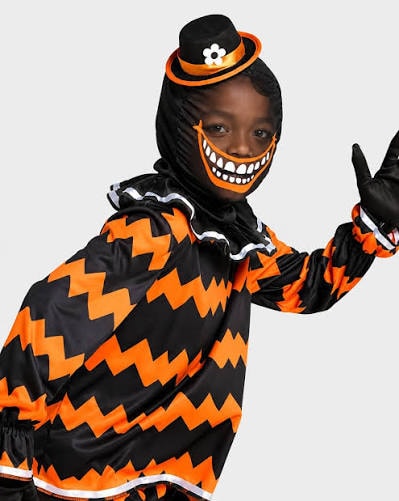
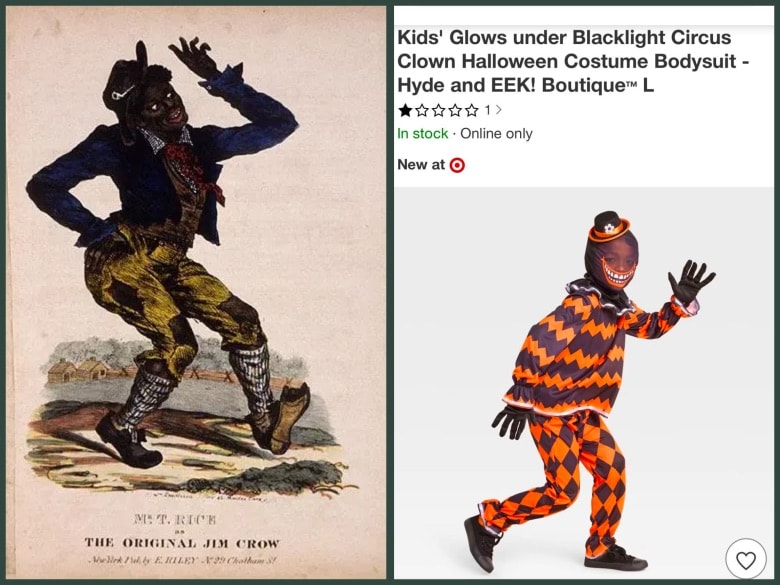
The controversy centers on Target's “Kids' Glows Under Blacklight Circus Clown Halloween Costume,” sold under the retailer's Hyde & EEK! Boutique seasonal brand.
The promotional images showed a young Black boy wearing an orange-and-black bodysuit, black gloves and a mask featuring an exaggerated wide smile and miniature top hat.
Critics on social media said the combination of the costume, mask and imagery evoked Blackface and racist minstrel-show caricatures. The backlash spread quickly, prompting Target to remove the product and issue a public apology.
Target says: We got this wrong
Target's response was direct.
The company said the costume was offensive, should never have been part of its assortment and was particularly hurtful to its Black guests, team members and partners.
Target also said removing the costume was an important first step and that it would look closely at how the product got through the company's process and what needs to change.
That admission is significant.
Target isn't simply saying consumers misunderstood a Halloween costume.
The company is acknowledging that something failed internally.
And that raises the question:
Who approved it?
Target has not publicly identified who designed the costume or who approved it for sale. Reuters reported that the retailer declined to identify the designer or explain the process by which the product was greenlit.
That's where this story gets bigger.
Someone designed the product.
Someone reviewed it.
Someone approved the promotional photography.
Someone approved the online listing.
And ultimately, the product made it into Target's assortment.
Where was the stop sign?
Why the Target brand matters
There is an important distinction between this controversy and another Target incident from 2024.
The current costume was sold under Hyde & EEK! Boutique, Target's seasonal Halloween brand.
Target has previously described the product-design operation behind its owned brands and its Halloween merchandise.
That makes the question of responsibility particularly important.
This isn't simply a story about an unidentified product that arrived at Target from an outside company.
Target now says its approval process failed.
So consumers deserve to understand what that process actually looks like.
Who reviews Halloween designs?
Who reviews potentially sensitive imagery?
Who has authority to stop a product?
And are racial and cultural considerations part of that review?
Target has not publicly provided those answers.
This isn't Target's first problem involving Black history
And this is where the history matters.
February 2024: Black history learning product pulled
In February 2024, Target removed a children's Civil Rights Magnetic Learning Activity after history teacher Tierra Espy posted a video pointing out that photographs of prominent Black historical figures were incorrectly matched with their names.
The product misidentified Booker T. Washington, Carter G. Woodson and W.E.B. Du Bois.
Target confirmed that it stopped selling the product and notified its publisher, Bendon Publishing, about the errors. Importantly, that product was made by Bendon—not Target itself.
That distinction matters.
But so does the larger question.
Once again, someone outside the corporation had to catch a problem involving Black history before the company did.
In 2024, it was a history teacher.
In 2026, consumers and social-media users raised concerns about a Halloween product.
January 2025: Target changes its DEI strategy
Then came another major chapter.
In January 2025, Target announced that it was ending several of its diversity, equity and inclusion initiatives.
Among the changes, Target said it would conclude its three-year DEI goals and its Racial Equity Action and Change (REACH) initiatives. The company also said it would stop participating in certain external diversity-focused surveys and changed the name of its Supplier Diversity team to Supplier Engagement.
Target said it remained committed to creating a sense of belonging and inclusion.
But the decision generated significant criticism from civil-rights advocates, employees, consumers and others who viewed the rollback as a retreat from commitments Target had made following the racial-justice movement of 2020.
Now, in August 2026, Target is again facing a controversy involving racial imagery.
Does one thing prove the other?
No.
There is currently no evidence establishing that Target's DEI changes caused the Halloween costume to be created or approved.
That would be irresponsible to claim.
But it is completely reasonable to ask whether changes to Target's diversity infrastructure affected how products are reviewed and who gets a voice in those decisions.
That is a question Target should answer.
What people are asking
The backlash has generated more than criticism of a single Halloween costume.
It has reopened a broader conversation about corporate accountability and representation.
Some Black consumers and critics have questioned whether Target's retreat from DEI commitments has reduced the number of diverse perspectives involved in corporate decision-making.
Reuters reported criticism from Minneapolis business leader Sheletta Brundidge, who questioned whether the absence of diverse voices could have contributed to the failure to recognize the imagery as offensive.
Target's shareholder critics have also raised concerns about the company's repeated missteps and their effect on consumer trust.
But there is an important point here:
We shouldn't assume that every Black person sees the costume the same way.
The strongest reporting doesn't tell readers what they must think.
It shows them the imagery, explains the historical context and asks why a company with Target's resources didn't identify the concern before the public did.
The history behind the outrage
Why did people immediately make the connection to Blackface and minstrel imagery?
Because the history is real.
Blackface minstrelsy became a major form of American entertainment in the 19th century. White performers darkened their faces and portrayed Black people through exaggerated and degrading stereotypes.
Those performances helped establish racist caricatures that persisted for generations.
The history of those images is why contemporary references to exaggerated Black facial features, costumes and performance poses can carry meaning far beyond the product itself.
The issue isn't necessarily whether Target's designers intended to invoke that history.
The issue is whether someone should have recognized the possibility before the costume was marketed to the public.
And then there is the photograph
The promotional image matters.
A young Black child was used to model the costume.
That means the product wasn't merely designed and placed in a warehouse.
The image had to be produced and approved for marketing.
Someone saw the photograph.
Someone saw the mask.
Someone saw the costume.
Someone saw the model.
Someone saw the final presentation.
And the product moved forward.
That creates a reasonable question:
How many opportunities were there to stop this?
Target's apology is important. But what happens next matters more.
Target did the right thing by removing the costume.
The company apologized.
It acknowledged the offense.
And it promised to examine its internal processes.
But corporate apologies are not accountability by themselves.
The public deserves to know what the investigation finds.
One mistake can happen. Repeated failures demand questions.
The 2024 Black-history product and the 2026 Halloween costume are not identical situations.
One was a third-party educational product containing factual errors.
The other is a Target-owned seasonal brand product that consumers said evoked racist imagery.
But they share one uncomfortable feature:
Target had to be alerted by people outside the company's internal process.
That should concern Target.
Not because every mistake means a company is racist.
But because a company of Target's size and influence should have systems capable of identifying culturally insensitive products before consumers have to do the work for them.
Target, we deserve more than an apology
Target says it is looking closely at what happened.
Good.
Now show us what that review finds.
The question isn't simply whether Target is sorry.
The question is whether Target understands why this happened.
Because pulling the costume answers one question:
What did Target do after the backlash?
It does not answer the more important one:
Why did nobody stop it before the backlash?
And that is the question Pittsburgh Urban Media believes Target needs to answer.
— Robin Beckham, Pittsburgh Urban Media