
The March on Washington is not a single moment in history. It is a living tradition — a recurring call to action that has brought Americans together at critical moments in the ongoing struggle for civil rights, voting rights, and human dignity.
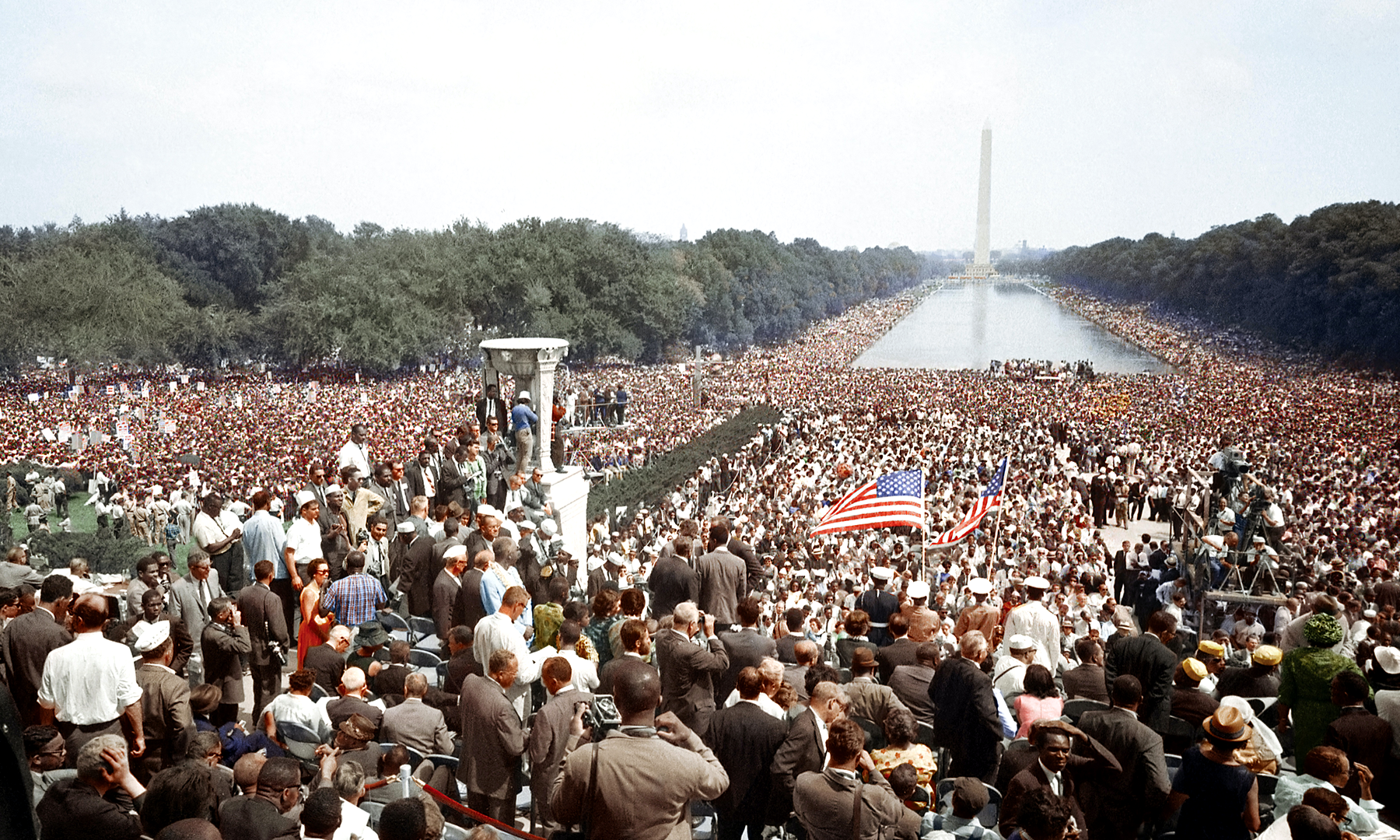
On August 28, 1963, an estimated 250,000 people gathered on the National Mall in Washington, D.C., for the March on Washington for Jobs and Freedom — one of the most powerful political demonstrations in American history. The march became a defining milestone of the civil rights movement, the backdrop for Dr. Martin Luther King Jr.’s iconic “I Have a Dream” speech, and a direct catalyst for the Civil Rights Act of 1964 and the Voting Rights Act of 1965.
As August 28, 2026 approaches — the 63rd anniversary — Pittsburgh Urban Media looks back at the march that shaped this nation, the people who made it happen, and the Pittsburgh voices that have always been part of the story.
Origins: A Vision Decades in the Making
The idea of a mass march on Washington did not begin in 1963. It was first conceived by A. Philip Randolph, the legendary labor leader and founder of the Brotherhood of Sleeping Car Porters. In 1941, Randolph threatened a march of 100,000 Black Americans on Washington to pressure President Franklin D. Roosevelt into banning employment discrimination in the defense industry. The threat worked — Roosevelt signed Executive Order 8802, the first federal action against racial discrimination in employment.
More than two decades later, Randolph revived the idea — this time in coalition with the nation’s leading civil rights organizations. The result was the 1963 March on Washington for Jobs and Freedom.

The Organizers: The Big Six — and the Man Behind the Logistics
The march was organized by a coalition of the nation’s premier civil rights organizations — known as the “Big Six” — along with Bayard Rustin, the brilliant strategist who coordinated the entire mobilization in just two months.
Conceived the idea of a mass march on Washington — first threatening one in 1941 to pressure President Roosevelt into banning employment discrimination in the defense industry.
Coordinated the entire 1963 mobilization in just two months — organizing transportation, sound systems, and crowd logistics for 250,000 people.
Delivered the iconic "I Have a Dream" speech from the steps of the Lincoln Memorial, departing from his prepared text to share his transcendent vision of a nation free from racial prejudice.
Brought the organizational power and legal expertise of the nation's oldest civil rights organization to the coalition.
At just 23 years old, delivered a fiery address calling for immediate action — a speech that was moderated at the request of other leaders but still electrified the crowd.
Focused the march's economic justice demands, pushing for fair employment and workforce opportunity alongside civil rights protections.
Represented the direct-action wing of the movement; CORE had pioneered the Freedom Rides and sit-in campaigns that built momentum for the march.
The Demands: Jobs, Freedom, and the Right to Vote
The march unified economic justice goals with urgent civil rights protections. Organizers presented a 10-point list of official demands to Congress and the Kennedy administration:
- Passage of meaningful civil rights legislation — no compromise, no filibuster
- Immediate elimination of all racial segregation in public schools
- A major public works program to provide jobs for all unemployed
- Passage of a law prohibiting discrimination in all housing supported by federal funds
- Extension of the Fair Labor Standards Act to all areas of employment
- A federal Fair Employment Practices Act barring discrimination in all employment
- Authority for the Attorney General to institute injunctive suits when constitutional rights are violated
- A broadened Civil Rights Commission with power to hire diverse staff
- An executive order banning discrimination in all federally assisted housing
- Lowering of the voting age to 18 and enforcement of the 14th Amendment
August 28, 1963: The Day of the March
On August 28, a diverse, multiracial crowd of demonstrators arrived via thousands of buses and trains from across the country. The rally began at the Washington Monument, with marchers walking roughly one mile down the National Mall to the Lincoln Memorial.
The program included remarks from various speakers and performances by celebrated artists including Mahalia Jackson, Joan Baez, and Bob Dylan. John Lewis, at just 23 years old, delivered a fiery address calling for immediate action.
The day culminated in Dr. King’s legendary address. He departed from his prepared text to share his transcendent vision — a vision of a nation where his children would “not be judged by the color of their skin but by the content of their character.”
“I have a dream that my four little children will one day live in a nation where they will not be judged by the color of their skin but by the content of their character.”
— Dr. Martin Luther King Jr., August 28, 1963
The Impact: Laws That Changed America
The massive, peaceful demonstration successfully pressured the federal government. Within a year, Congress passed the Civil Rights Act of 1964, banning discrimination based on race, color, religion, sex, or national origin. The following year, the Voting Rights Act of 1965 outlawed discriminatory voting practices that had disenfranchised Black Americans across the South.
The march did not end the struggle — but it proved that organized, nonviolent mass action could move the machinery of government. That lesson has never been forgotten.
A Timeline of Marching: 1963 to 2026
On August 28, 1963, more than 250,000 people gathered at the Lincoln Memorial in one of the most powerful demonstrations in American history. Dr. Martin Luther King Jr. delivered his iconic "I Have a Dream" speech, calling for an end to racism and a future of equality. The march helped lead directly to the Civil Rights Act of 1964 and the Voting Rights Act of 1965.
Pittsburgh residents and civil rights leaders joined the march, part of a national wave of Black civic engagement that would shape the city's political landscape for generations.
Organized by Minister Louis Farrakhan and the Nation of Islam, the Million Man March drew an estimated 400,000 to over one million Black men to Washington, D.C. on October 16, 1995. The gathering was a call for unity, personal responsibility, and civic engagement at a time of rising incarceration rates and economic inequality.
Buses from Pittsburgh churches and community organizations carried hundreds of men to Washington, D.C. for the historic gathering.
On October 25, 1997, Philadelphia became the site of the Million Woman March — a grassroots gathering of Black women from across the country. Organized by Phile Chionesu and Asia Coney, the march drew an estimated 500,000 to 2 million participants and focused on sisterhood, community healing, and the empowerment of Black women and families.
Pittsburgh women traveled to Philadelphia in solidarity, many describing the march as a transformative moment of collective power.
On August 28, 2020 — the 57th anniversary of the original march — tens of thousands gathered again at the Lincoln Memorial. Led by Martin Luther King III and Rev. Al Sharpton, the march came in the wake of the deaths of George Floyd, Breonna Taylor, and others, renewing the call for racial justice, police accountability, and voting rights.
Pittsburgh community members and organizations participated both in Washington and in local solidarity marches across the city.
On August 28, 2026 — the 63rd anniversary — civil rights leaders are calling the nation back to Washington. The "March on Washington 2026: Defend the Vote" is led by Rev. Al Sharpton, Martin Luther King III, and Arndrea Waters King, with a focus on protecting voting rights and civic participation.
Pittsburgh is organizing. Churches, community groups, and civic organizations are preparing delegations. Pittsburgh Urban Media will follow every step of the journey.
Pittsburgh’s Sacred Ground: Freedom Corner
At the corner of Crawford Street and Centre Avenue in the Hill District stands Freedom Corner — Pittsburgh’s most sacred civil rights landmark. It was here that generations of Pittsburgh residents gathered before boarding buses to Washington, D.C., to march for justice.
The corner became a symbol of Pittsburgh’s commitment to the national civil rights movement. Before the 1963 March on Washington, before the Million Man March, and before every major national demonstration, Freedom Corner was the gathering point — the place where Pittsburgh said: We are going. We are part of this.
As August 28, 2026 approaches, that tradition continues.
Modern Legacy: The March Continues
The legacy of the 1963 demonstration continues to inspire modern social movements. A coalition of modern civil rights organizations led by the National Action Network has announced the “March on Washington 2026: Defend the Vote” rally — scheduled for August 28, 2026, the 63rd anniversary of the original march.
Organized by Rev. Al Sharpton alongside Martin Luther King III and Arndrea Waters King, the 2026 march will pressure lawmakers to restore federal voting rights protections — carrying forward the same demands that brought 250,000 people to the Lincoln Memorial 63 years ago.