
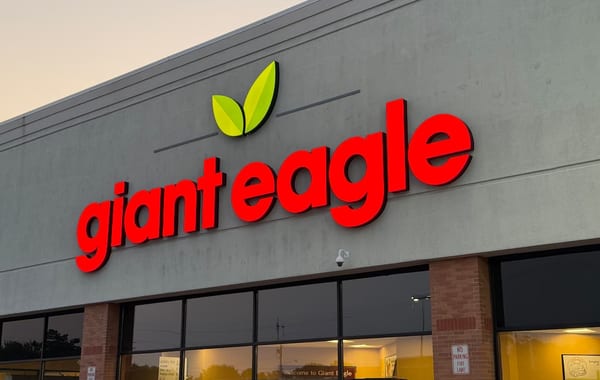
A major shift is coming to Western Pennsylvania’s grocery landscape as Kroger announced plans to acquire regional grocery giant Giant Eagle in a deal valued at $1.65 billion, setting the stage for one of the most significant retail consolidations in the region in decades.
The agreement, announced July 1, 2026, includes $1.25 billion in cash and approximately $400 million in assumed liabilities, according to company filings. The deal is expected to close in 2027, pending regulatory approval.
If approved, the acquisition will bring roughly 200 supermarkets and pharmacies across Pennsylvania, Ohio, West Virginia, Maryland, and Indiana under Kroger ownership, along with about $9 billion in annual sales and more than 30,000 employees tied to the Giant Eagle system.
A Return to Pittsburgh’s Grocery Battlefield
The move marks a symbolic return for Kroger, which once operated in Western Pennsylvania before exiting the market in the 1980s. Its departure left Giant Eagle to grow into the dominant regional grocer in Pittsburgh and surrounding counties.
Now, Kroger’s re-entry signals a renewed competition in a market that has shifted dramatically over the past 40 years — now shaped by national chains, warehouse clubs, discount retailers, and rapidly changing consumer habits. Industry analysts say the deal is part of Kroger’s broader strategy to strengthen its regional footprint while avoiding the regulatory challenges that stalled its attempted merger with Albertsons in 2024.
What It Means for Pittsburgh Shoppers
For consumers, the immediate impact is expected to be minimal, as the companies have indicated that Giant Eagle stores will retain their branding during the transition period. However, longer-term changes could include:
Kroger executives have emphasized that the goal is to improve “value, convenience, and customer experience,” while maintaining continuity in local communities.
Regulatory Review Ahead
The deal now moves into a lengthy regulatory review process. Antitrust officials are expected to evaluate market concentration in Western Pennsylvania, where Giant Eagle has historically held a dominant share of grocery retail. Analysts note that because the transaction is structured as a regional acquisition rather than a national mega-merger, it may face fewer hurdles than Kroger’s failed $25 billion attempt to acquire Albertsons.
Still, regulators are likely to examine:
A Defining Moment for Western Pennsylvania Retail
Giant Eagle, founded in 1931 in Pittsburgh, has long been more than a grocery chain — it has functioned as a regional institution, employer, and economic anchor across Western Pennsylvania.
This acquisition marks a turning point not just in corporate ownership, but in how food access, retail competition, and community economics will evolve in the region over the next decade. As the deal moves forward, one question will define the story for Pittsburgh shoppers and workers alike: what does this mean for the communities Giant Eagle has served for nearly a century?
Founded in Pittsburgh in 1931, Giant Eagle has operated as the dominant regional grocer in Western Pennsylvania for nearly a century — serving as a major employer and community anchor across five states.