
Five Black governors. A historic breakthrough for Black women in executive leadership. Three Black women preparing to serve simultaneously in the U.S. Senate. A potential first Black Speaker of the House. And a national Black vote that once again demonstrated its influence. The 2026 election changed the face of American political leadership—and brought the power of Black representation into sharper focus.
The 2026 election will be remembered for more than a change in control of Congress. Across the country, Black candidates made history, established leaders secured new mandates, and voters helped reshape the political landscape from state capitols to Washington.
For African Americans, the results tell several stories at once: the growing presence of Black leaders in executive office, the expanding influence of Black women, the importance of congressional representation, and the continuing significance of Black voters in national elections.
From Pennsylvania to Georgia, Florida to Wisconsin, Nevada to the U.S. Virgin Islands, Black leadership was part of the national election story.
And the story is still unfolding.
FIVE BLACK GOVERNORS: A HISTORIC MOMENT IN AMERICAN POLITICS
For most of American history, the governor's office remained largely inaccessible to Black Americans.
Virginia's L. Douglas Wilder became the first Black person elected governor of a U.S. state in 1989 and took office in 1990. Maryland's Wes Moore became the third Black governor elected in American history when he took office in 2023.
The November 2026 election dramatically changed that landscape.
Beginning in 2027, five Black governors are expected to serve simultaneously—the largest number in the nation's history.
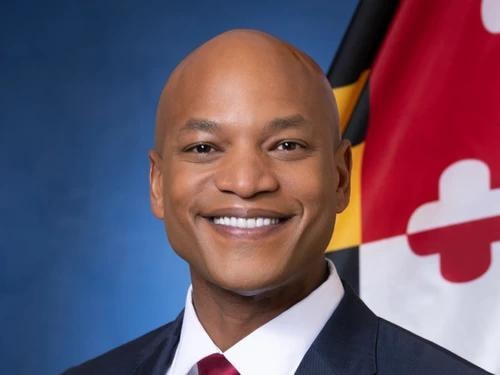
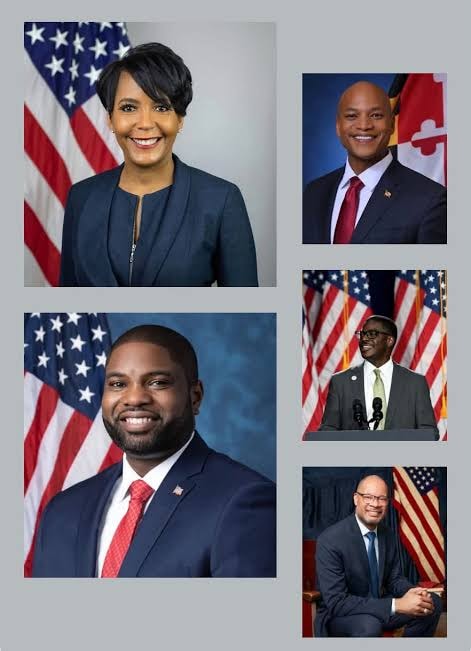
Wes Moore — Maryland
Moore, the first Black governor of Maryland, won reelection. His continued leadership places him among the most prominent Black executives in American government. He also serves as chair of the National Governors Association.
Byron Donalds — Florida
Republican Byron Donalds won Florida's gubernatorial election, becoming the state's first Black governor and the first Black Republican elected governor in the United States.
His victory is significant not only for Florida but also for the history of Black elected officials across party lines.
Keisha Lance Bottoms — Georgia
Former Atlanta Mayor Keisha Lance Bottoms made history by becoming the first Black woman elected governor of a U.S. state. She also becomes Georgia's first woman governor.
Her victory ended more than two decades of Republican control of the Georgia governor's office. Her election is a milestone for Black women seeking the nation's highest state offices.
David Crowley — Wisconsin
Milwaukee County Executive David Crowley defeated Republican Tom Tiffany to become Wisconsin's first Black governor.
His victory brings another Midwestern state into the historic group of Black-led state governments.
Aaron Ford — Nevada
Nevada Attorney General Aaron Ford defeated Republican incumbent Joe Lombardo, becoming Nevada's first Black governor.
Ford's victory also gives Democrats a major win in a closely watched battleground state.
Five governors. Five state governments. A historic expansion of Black representation in executive leadership.
The significance extends beyond the milestone. Governors influence state budgets, education, public safety, economic development, health care, appointments and the priorities that shape residents' everyday lives.
STACEY PLASKETT: A HISTORIC FIRST IN THE U.S. VIRGIN ISLANDS
Another historic victory came from the U.S. Virgin Islands.
Stacey E. Plaskett, the territory's longtime delegate to Congress, won the gubernatorial election with her running mate, Milton Potter.
The ticket received 11,865 votes, or 62.8% of the vote, according to unofficial returns.
Plaskett becomes the first woman elected governor of the U.S. Virgin Islands and the first Black woman elected governor of a U.S. territory.
Her victory represents a separate historic milestone from Keisha Lance Bottoms' election in Georgia.
Plaskett's transition from representing the territory in Washington to leading its government places another Black woman in a significant executive leadership position.
Together, these victories make 2026 a defining year for Black women in American political history.
BLACK WOMEN BREAKING BARRIERS IN WASHINGTON
The governor's races were not the only historic developments.
Illinois Lieutenant Governor Juliana Stratton won the state's open U.S. Senate seat, joining Senators Angela Alsobrooks of Maryland and Lisa Blunt Rochester of Delaware.
For the first time in American history, three Black women will serve in the U.S. Senate simultaneously.
That is a significant milestone in a chamber where Black women have historically been underrepresented.
The three senators bring different state experiences and policy priorities to the national conversation.
Their presence also adds to the broader representation of Black women in Congress, state government and local leadership.
HAKEEM JEFFRIES: THE POTENTIAL FIRST BLACK SPEAKER OF THE HOUSE
One of the most consequential developments of the 2026 election is unfolding in the U.S. House of Representatives.
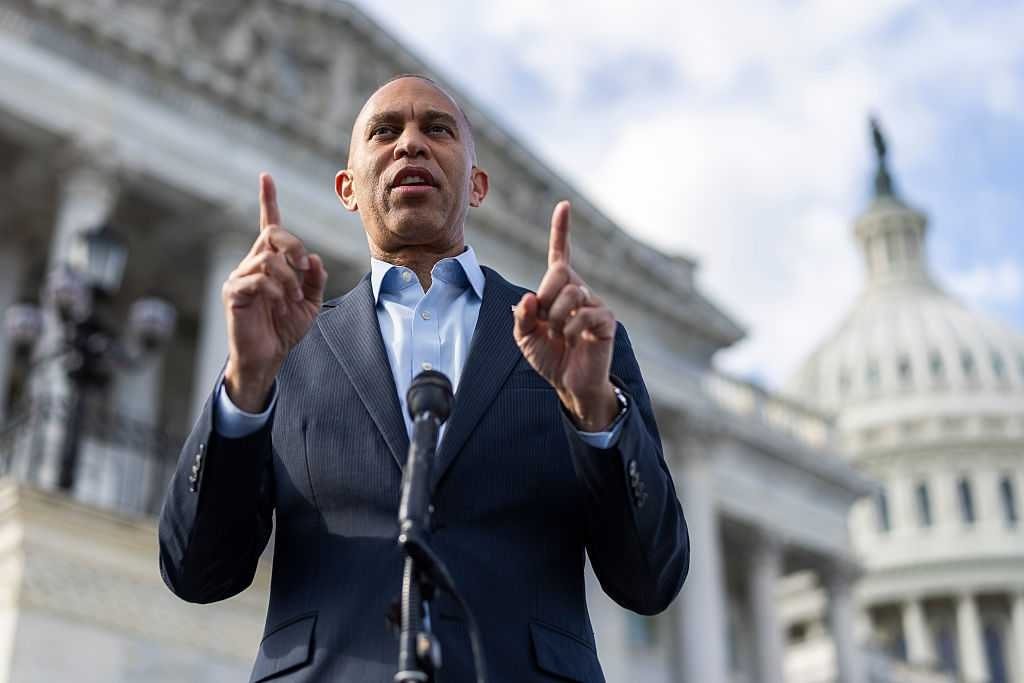
Democrats won control of the House, and Democratic Leader Hakeem Jeffries is expected to be nominated and elected Speaker when the new Congress convenes in January 2027.
If elected, Jeffries will become the first Black person to serve as Speaker of the House.
The position is second in the presidential line of succession and carries significant authority over the legislative agenda, committee assignments and the operations of the chamber.
Jeffries, who represents New York, has led House Democrats since 2023.
His potential elevation would mark another major milestone in the history of Black political representation—more than 150 years after Joseph Rainey became the first Black member of the U.S. House.
The election of a Black Speaker would place an African American lawmaker at the center of national legislative leadership.
DEMOCRATS WIN CONTROL OF BOTH CHAMBERS
The 2026 midterms also changed the balance of power in Washington.
Democrats won control of both the U.S. House and Senate, ending Republican control of Congress.
The results create a new political environment for the final two years of President Donald Trump's current term.
Democratic control of Congress will shape legislative priorities, oversight, budget negotiations, judicial confirmations and the relationship between Congress and the White House.
For Black communities, congressional control matters because federal decisions affect voting rights, civil rights enforcement, health care, education, housing, economic opportunity, small-business development and funding for local communities.
The election also puts Black congressional leadership in a position to help shape the direction of the new majority.
HOW MANY BLACK MEMBERS OF CONGRESS?
Black representation in Congress has grown considerably over the past several decades, although it remains below the Black share of the national population.
USAFacts reported that 66 Black members were serving in the 119th Congress before the November election: 61 in the House and five in the Senate.
The Senate total will increase with Juliana Stratton's election, bringing the number of Black senators to six when the new Congress takes office, based on the current roster and election result.
The six are:
- Cory Booker — New Jersey
- Tim Scott — South Carolina
- Raphael Warnock — Georgia
- Angela Alsobrooks — Maryland
- Lisa Blunt Rochester — Delaware
- Juliana Stratton — Illinois
The House roster is also changing with new members elected in 2026. The final number of Black voting representatives should be confirmed against the official roster when election results and vacancies are finalized.
The number matters, but so does the range of representation: Black lawmakers from urban, suburban and rural districts; from the South, Midwest, Northeast and West; and from both major political parties.
WISCONSIN: A POLITICAL SHIFT WITH NATIONAL SIGNIFICANCE
Wisconsin delivered another major development.
David Crowley's gubernatorial victory was accompanied by Democratic victories in both chambers of the state legislature.
Democrats won control of the Wisconsin Senate and Assembly, creating the state's first Democratic governing trifecta in more than 16 years.
The results represent a major shift in a state that has been closely divided politically.
Crowley's victory is historic as Wisconsin's first Black governor. The legislative results also give the incoming administration a different governing environment.
For Black communities in Milwaukee and across Wisconsin, the next question is how the new leadership will address economic opportunity, education, housing, public safety and investment in communities that have experienced longstanding disparities.
BLACK WOMEN LEADING AMERICA'S CITIES
Black women's leadership is also visible in city halls across the country.
Among the prominent Black women serving as mayors are:
- Cherelle Parker — Philadelphia
- Karen Bass — Los Angeles
- Barbara Lee — Oakland
- Mary Sheffield — Detroit
- Muriel Bowser — Washington, D.C., whose term is ending as Janeese Lewis George prepares to take office
- Pamela Goynes-Brown — North Las Vegas
The Center for American Women and Politics at Rutgers reported that 27 Black women were serving as mayors as of July 2026.
The November election added new developments. Janeese Lewis George is set to succeed Bowser in Washington, D.C., and Tiffany Moore Russell won the Orange County mayoral election in Florida, becoming the first Black woman to hold that office.
Mayors influence the daily lives of residents through decisions involving housing, transportation, public safety, neighborhood development, city services, workforce opportunities and local economic investment.
Their leadership is an important part of the larger story of Black political power.
THE NATIONAL BLACK VOTE: A SIGNIFICANT SHIFT IN 2026
Beyond the candidates and officeholders, the election also provided a revealing look at national voting patterns.
The Associated Press Voter Poll, which surveyed more than 100,000 voters between October 19 and November 3, found that approximately 90% of Black voters supported Democratic candidates in their U.S. House races.
The poll also found a notable shift among Black men, who moved back toward Democratic candidates compared with their voting patterns in the 2024 presidential election.
About nine in ten Black men supported Democratic House candidates in 2026. That compares with approximately three-quarters of Black men who supported Kamala Harris in the 2024 presidential election, according to the AP's comparison.
Black women also continued to show strong Democratic support, with approximately nine in ten backing Democratic House candidates.
These findings are important because the 2024 election prompted considerable national discussion about changes in Black men's voting preferences and whether those changes would continue.
The 2026 results suggest that voting preferences are not fixed. They can change with the candidates, issues, political environment and type of election.
It is important to distinguish these figures from voter turnout. The AP poll measures reported candidate preference among surveyed voters; it does not establish how many Black Americans participated nationally.
BLACK VOTERS ARE NOT A MONOLITH
The national conversation about Black voters often treats the community as one political constituency.
But Black voters are not a monolith.
Differences exist across age, gender, geography, income, education, religion and political priorities. Black men and Black women may share concerns while expressing different views about candidates, parties and policies.
The 2026 AP findings offer one snapshot of national voting preferences. They also demonstrate why meaningful coverage must look beyond assumptions and examine actual results and survey evidence.
The Black vote is not simply a political statistic. It reflects millions of individual decisions about leadership, economic conditions, public policy and the future of the country.
AND HERE AT HOME: PENNSYLVANIA'S BLACK LEADERSHIP
The national story has a direct connection to Pennsylvania.
The Commonwealth's Black elected leadership includes:
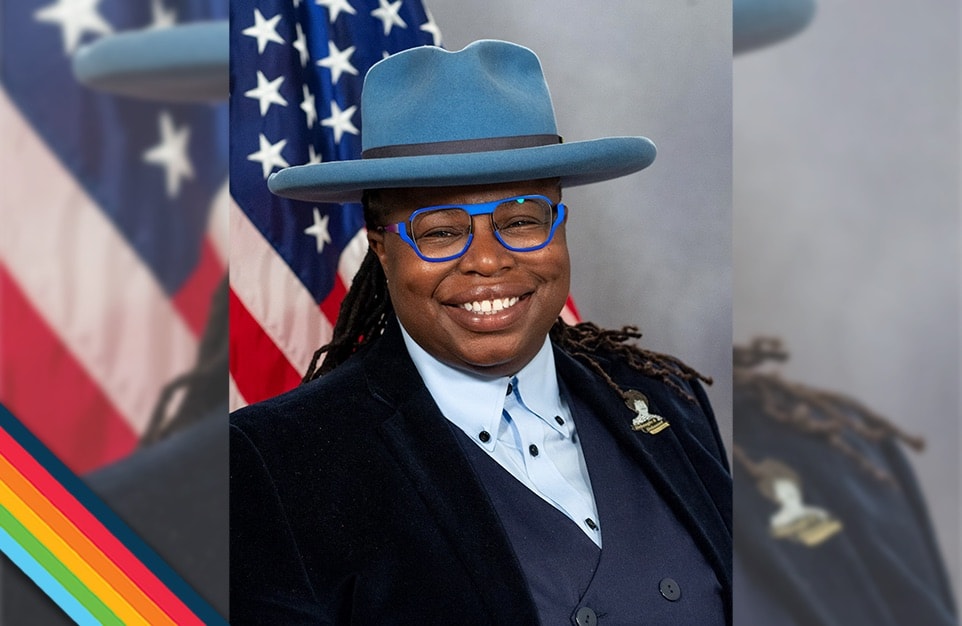
Austin Davis — Lieutenant Governor of Pennsylvania
Davis, a McKeesport native, won reelection alongside Governor Josh Shapiro. He remains Pennsylvania's first Black lieutenant governor.
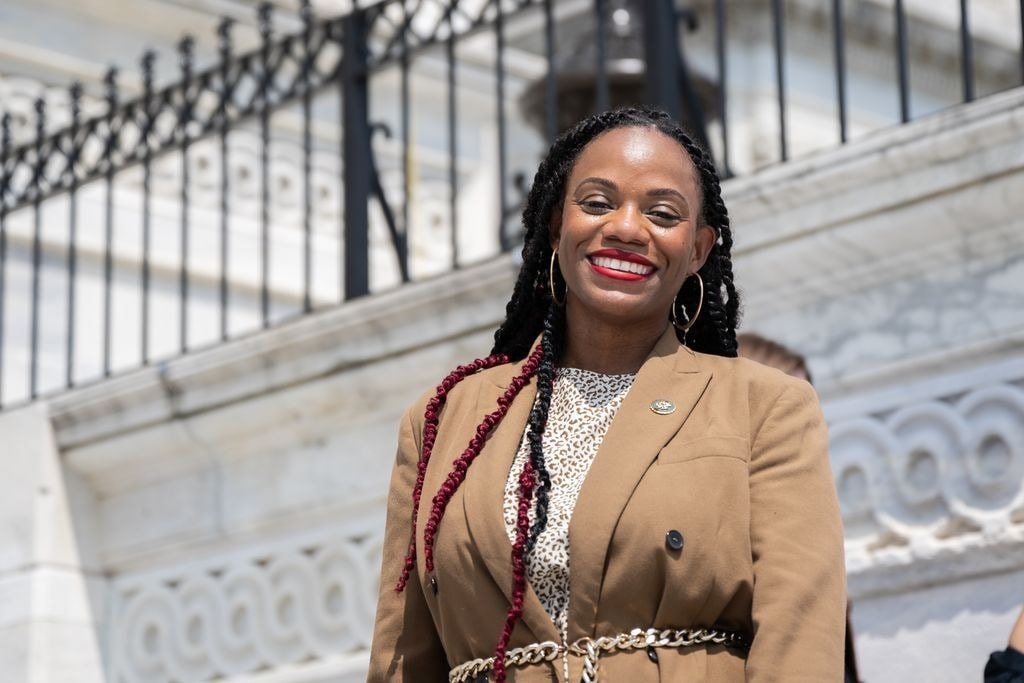
Summer Lee — U.S. Representative, Pennsylvania's 12th Congressional District
Lee won reelection, continuing her representation of Pittsburgh and surrounding communities in Washington. She remains Pennsylvania's first Black woman elected to Congress.
La'Tasha D. Mayes — Pennsylvania House, 24th District
Mayes continues her service representing Pittsburgh communities in Harrisburg.
Aerion Andrew Abney — Pennsylvania House, 19th District
Abney continues his service in the state legislature, representing Pittsburgh communities.
At the local level, Pittsburgh's political landscape is also changing. The city's mayoral transition and the work of City Council, Allegheny County government and school boards all shape the decisions that affect Black residents.
The question for Pittsburgh is not simply whether Black leaders hold office. It is how their positions translate into resources, access, accountability and meaningful improvements in the communities they represent.
THE MEANING OF BLACK POLITICAL POWER
The 2026 election produced a remarkable collection of milestones.
Five Black governors will serve simultaneously. A Black woman will lead Georgia. Stacey Plaskett will become the first woman governor of the U.S. Virgin Islands and the first Black woman elected governor of a U.S. territory. Three Black women will serve together in the U.S. Senate. Hakeem Jeffries is positioned to become the first Black Speaker of the House. Democrats have won control of both chambers of Congress.
And across the country, Black voters participated in an election that reshaped the political landscape.
These developments are not the work of one election cycle alone. They reflect generations of organizing, advocacy, community leadership, voter participation and the determination of candidates who sought offices that had long been closed to people who looked like them.
But representation is only one measure of political power.
The next measure is what happens after the celebrations: whether elected officials deliver on the issues affecting their constituents, whether Black communities have access to decision-making, and whether public policy produces opportunity and meaningful results.
From Pittsburgh to Washington, Black leadership is part of the national political story.
Black power showed up at the ballot box, in the halls of government and in the changing face of American leadership. The work now is to make that representation count.