
The African Heritage Classroom: The Black Pittsburgh Story Inside Pitt’s Cathedral of Learning
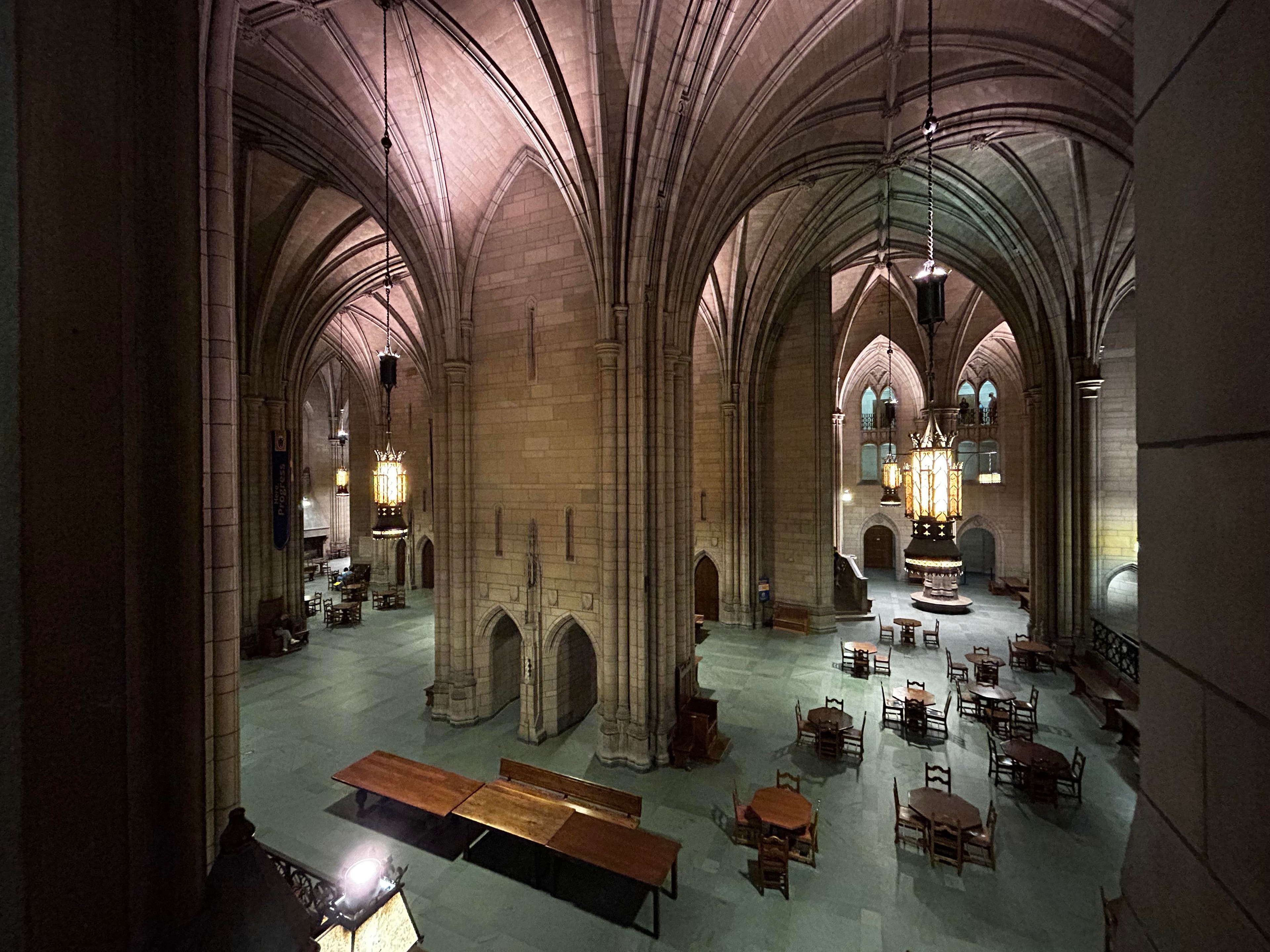
When the University of Pittsburgh celebrates 100 years of its Cathedral of Learning, the landmark’s history can be told through its architecture, classrooms and the cultures represented throughout its Nationality Rooms.
But on the third floor, Room 330 tells another story.
It is the story of Black Pittsburgh coming together to make sure African heritage had a permanent place inside the Cathedral.
The African Heritage Classroom was dedicated in 1989 after nearly two decades of organizing, fundraising, research and design.
At 680 square feet, the room is small compared with the 42-story building surrounding it.
Its story is anything but small.
A Room Unlike the Others
The Nationality Rooms program was created in the late 1920s as a way to involve Pittsburgh’s immigrant communities in the development of the Cathedral of Learning. The rooms were traditionally organized around individual nationalities and their cultural heritage.
The African Heritage Classroom presented a different challenge.
How could one classroom represent an entire continent?
Interest in an African room dates to the 1930s, but the effort gained momentum in 1972, when a committee of leaders from Pittsburgh’s Black community was formed to pursue the project.
The challenge was particularly significant because the Nationality Rooms were designed around individual countries. Rather than favoring one African nation, the committee sought to create a room representing the broader African continent.
Former Nationality Rooms director E. Maxine Bruhns explained the practical issue: space limitations meant that creating individual rooms for African nations was not realistic.
So the African Heritage Classroom became something different—a Pan-African space within a program built largely around nationality.
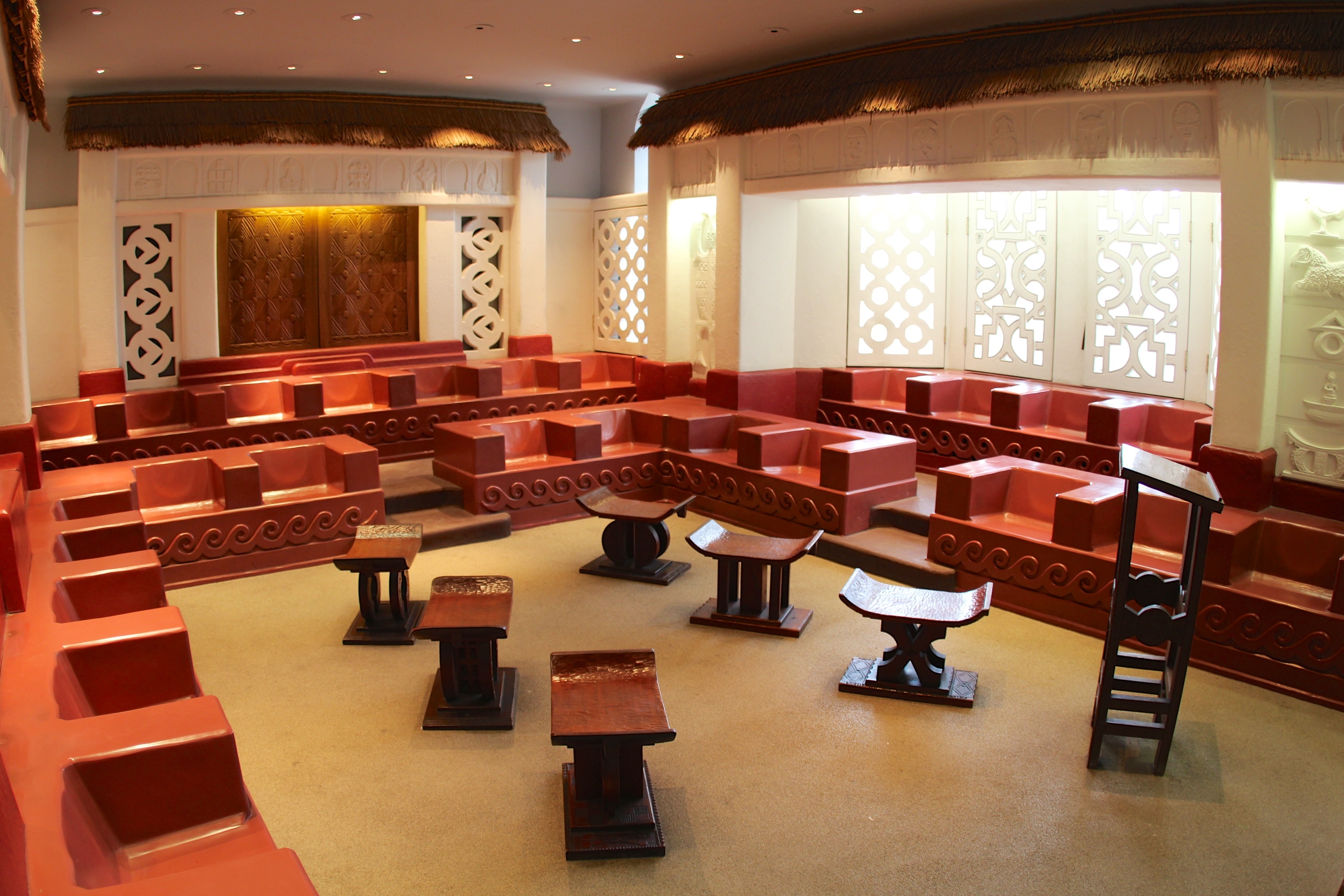
The African Heritage Classroom, Room 330, Cathedral of Learning. The room’s design is inspired by an 18th-century Asante temple courtyard in Ghana.
Pittsburgh’s Black Community Takes the Lead
The project was not simply an architectural commission.
It was a community campaign.
For approximately 15 years, committee members raised money, collected artifacts and developed the concept for the classroom. The campaign ultimately raised more than $250,000, with contributions coming from donors that included Pittsburgh families with young children.
Among the Pittsburgh community leaders connected to the effort was Walter C. Worthington, a longtime Hill District resident and community advocate. Historic Pittsburgh records show that Worthington initiated and chaired the African Heritage Classroom Committee and that fundraising and campaigning began in 1972, with the room completed in 1989.
A 1994 Congressional Record tribute described Worthington’s more than two decades of leadership with the committee and credited his efforts with helping bring the African Heritage Classroom to the Cathedral.
That history is important because it puts names and people behind what can otherwise look like simply another beautiful room in the Cathedral.
Black Pittsburgh organized to build it.
Designing Africa Into One Room
By the mid-1980s, the project had reached the architectural stage. Pittsburgh architect William J. Bates was selected to take on one of the project’s most difficult challenges: incorporating multiple African cultures into a single classroom.
Bates, who later became the second African American president of the American Institute of Architects, approached the project as an opportunity to connect architecture to African history rather than simply reproduce European architectural traditions.
He turned to Laurence Glasco, a Pitt professor of African American history, for additional expertise. Glasco selected an 18th-century Asante temple courtyard in Ghana as the architectural focal point.
The courtyard was particularly meaningful because it could serve as a unifying concept rather than suggesting that all African cultures were the same. It represented a place of gathering—of family, community, learning and tradition.
Glasco’s research took him beyond Pittsburgh. He studied African artifacts in museums in London, Paris and Munich and traveled to Ghana, where he photographed traditional temples and shrines.
The goal was authenticity. Not a generic interpretation of Africa. Not a European room decorated with African objects. But a classroom whose architecture itself could tell an African story.
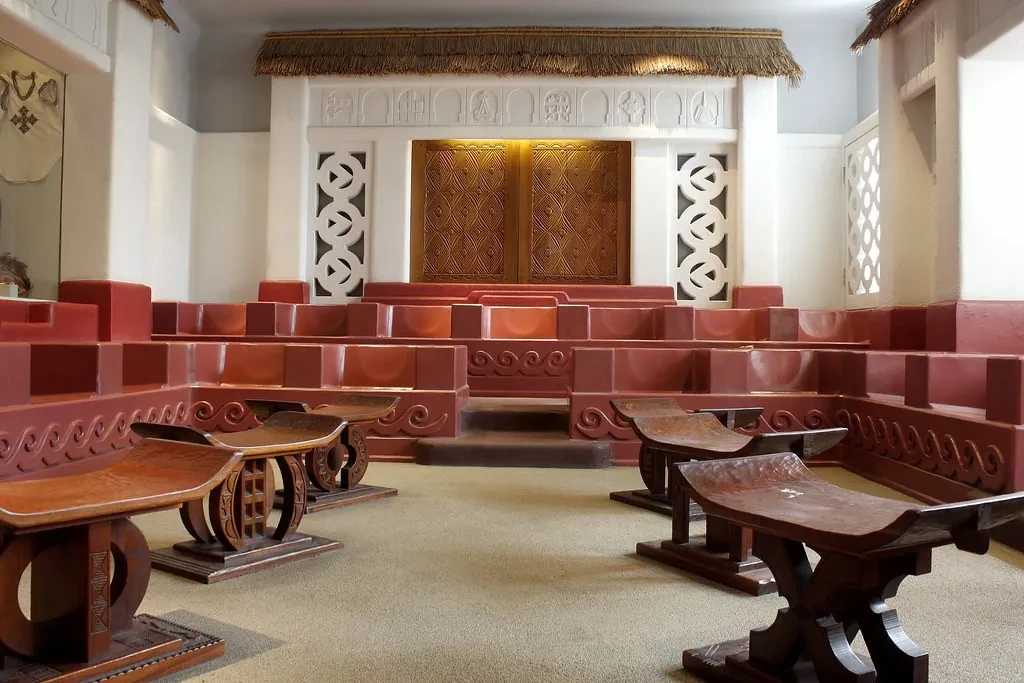

Carved wooden details throughout the classroom reference Yoruba, Asante and other African cultural traditions. Carvings by Nigerian sculptor Lamidi Olonade Fakeye.
A Thread Through African History
The completed classroom incorporates references to several African kingdoms and cultures. Bates described his goal as wanting to “draw a thread to the architecture of Africa.”
That thread appears throughout the room.
Nigerian sculptor Lamidi Olonade Fakeye created Yoruba-style carvings for the door, incorporating references to historic cultures including Egypt, Nubia, Ethiopia, Benin, Kongo/Angola, Kuba, Mali and Zimbabwe.
African cultural references also appear in the room’s friezes, artifact display case, stairs, student benches, stools and openwork screens.
The room also benefited from the involvement of African students at Pitt, who advised the design team about the importance of the courtyard. Ghanaian professor of art Kweku Andrews contributed the roof, stools and plasterwork, while Pittsburgh architect William Bates translated the research and ideas into the finished space.
The result is a classroom that is simultaneously rooted in particular African traditions and intentionally broader than any single nation.
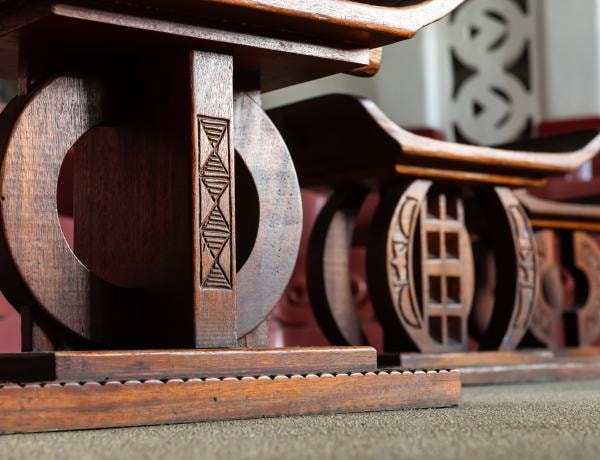
Asante-style stools and benches fill the classroom floor, each piece a reference to African cultural tradition.
“Draw a thread to the architecture of Africa.”
— William J. Bates, architect, African Heritage ClassroomDecember 17, 1989
After years of work, the African Heritage Classroom was dedicated on December 17, 1989. The dedication reflected the international character of the room itself.
An African blessing was conducted by Dr. J. H. Kwabena Nketia. African ambassadors attended in traditional clothing, and traditional music filled the Cathedral’s Commons Room.
The room was no longer an idea. It was part of Pitt. And it was part of Pittsburgh.
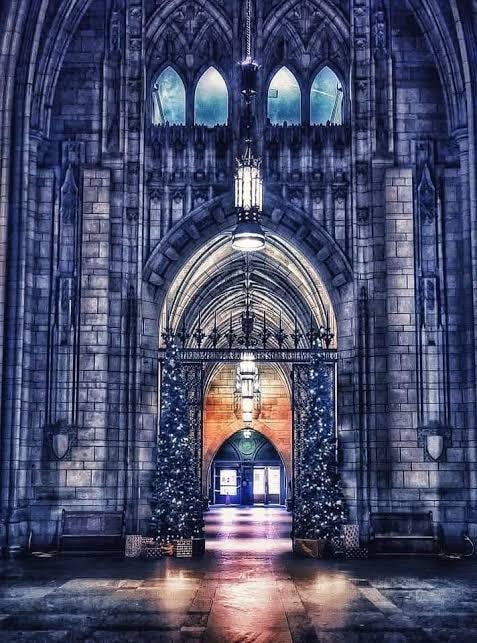
The Cathedral of Learning’s Commons Room, where traditional African music filled the space during the December 17, 1989 dedication ceremony.
More Than Architecture
It is easy to look at the African Heritage Classroom primarily as an architectural achievement. It certainly is one. But its history also raises a bigger question:
Who gets to see themselves represented inside an institution?
For Pittsburgh’s Black community, the answer required years of work. It required people to organize. It required fundraising. It required research. It required community members, Pitt students, scholars, artists and architects to work together. And it required a vision broad enough to represent Africa without reducing the continent to a single culture.
That makes Room 330 more than a classroom.
It is a record of community participation.
From Black Student Activism to Black Cultural Presence
There is also a connection between this story and the 1969 Black Action Society sit-in inside the Cathedral.
In 1969, Black students used the Cathedral as a place to demand institutional change. Three years later, in 1972, a committee of Pittsburgh Black community leaders began organizing around the African Heritage Classroom.
The two efforts were not the same project, and they should not be presented as one continuous campaign. But together they illustrate different chapters in the changing relationship between Pitt and Pittsburgh’s Black community.
One demanded access, representation and institutional change. The other created permanent cultural representation.
By 1989, African heritage was not simply something being discussed at Pitt. It had a room.
A legacy still inside the Cathedral. Still on the third floor. Still in Room 330.
Waiting for the next generation of Pittsburgh to walk through its doors.